
Stephen
Terry, Director


Life
and Death
Commentary
for the January 17, 2026, Sabbath School Lesson
 Do not be
amazed at this, for a time is coming when all who are in their graves will hear
his voice and come out." John 5:28-29
Do not be
amazed at this, for a time is coming when all who are in their graves will hear
his voice and come out." John 5:28-29
Despite
fewer than a handful of exceptions, we are all born to die. Death pursues us
all, whether springing upon us suddenly as in an accident, with an infarction
or an aneurysm, or walking by our side through the slow passing of the years.
Despite those decades, even then, death comes earlier than we would have it. It
can be a mercy for those with chronic health issues, providing surcease from
pain and disability that rob life of the joy it was meant to have. It can mean
a longed-for rest as energy abates with age. When we are in the early decades
of life, its end seems so far away as to be nearly invisible. We do not see
death's grim visage accompanying us each day. Death knows we are his and
despite our indifference, it never loses sight of the denouement as our lives
eventually unravel to reveal what was important and what was not--what was real,
and what was only fantasy that occupied our imaginations but did little to prepare
us to say goodbye to all that we have loved in this life.
Did
we live good lives? As a pastor, bringing communion to those who were near the
end of their lives, those who expressed regret for lives they feel they have
wasted confessed their choices that they felt fell short in life. They looked
for an absolution, but while I can point them to the one who died on their
behalf, I am powerless to save them from the thoughts that torment them as the
one who accuses each of us (Revelation
12:10-12) continually brings their failings up to remind them and end their
years in discouragement. As their aches and pains rob them of sleep each night,
so too does this mental anguish. Some may fret from fear of punishment. For
others it may be regret over opportunities missed, broken relationships that
might have been salvaged, or simply wondering what
might have been different if they had simply gone this way instead of that. A person
who in the end claims to regret nothing is either a liar or a psychopath because
no one has chosen perfectly for their entire life. We have all failed to
measure up at various points. This leaves us like Robert Frost, pondering "The
Road Not Taken" and realizing along with him "That has made all the
difference."
Little
have we realized that so many choices have set before us life or death in
clothing that belies their importance. I have experienced enough near misses in
life to attest to the importance of the choices we make. Several years ago,
when returning home to Spokane County from Puget Sound in Western Washington
State, my wife and I lingered longer than we had planned but we made the choice
to remain, after we proceeded on our way, we crossed the Columbia River midway
home and discovered that a car had exploded and set the fields on fire
surrounding the highway. The road had been closed while emergency crews put out
the fire and cleaned up the accident. Had we left when we originally intended,
we would have arrived on the scene of the accident when it was unfolding.
Choosing the later departure time "made all the difference" that day. Friends
and acquaintances have shared similar experiences that have further endorsed
the importance of our choices.
We seldom
realize the life or death that sits behind those inconsequential choices.
According to Apostle Paul, we all make bad choices. (Romans
3:23) And those bad choices can lead us down a bad path, even to death. But
God offers us better choices that breathe life for us. (Romans
6:23) Jesus said, "I have come that they may have life, and have it to the
full." (John 10:10b) On one hand, we have the Deceiver, the Accuser, the one
called Satan or the Serpent who offers us a divergent course from what God is
offering us, and on the other hand we have life offered by Jesus. Why do we
choose death over life? We do so because death looks so attractive in so many
ways. We know that a donut will taste so good despite what it is doing to our
triglycerides. We know that cigarettes or a vape will calm us down, though
while doing so, it is destroying our lungs. Self-destructive choices can feel
so good when we make them, but eventually the glittering façade falls away, and
we are left with ashes though we thought we were getting roses.
The
choice of life needs no false fronts to draw people in. But reality can seem
harsh to those awash in self-indulgence. And the siren song of death never
stops titillating us with its sensuous melody, a melody we learned the words to
when we were lost in death's arms. That melody hardened our hearts against yearning
for the sweetness of life. Instead, it convinces us with its ear worm of lies
that the very things killing us are life's greatest joys. We dance to that
tune, carried away with the thrill until the day comes when we can dance no
more. When we age and our joints and muscles no longer function as they did, we
stumble through the movements, but the dance no longer brings the joy it did.
We reach a time when the phone numbers of doctors and clinics outnumber the
phone numbers of friends in our contact list.
Eventually,
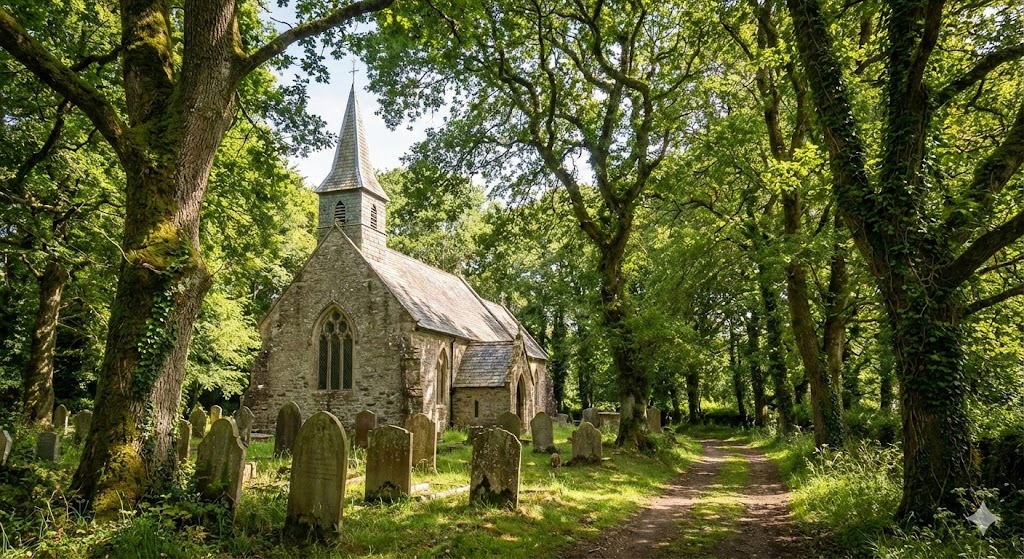
we come to the end and in the metaphor of a church yard, we find the answer to
life. While new churches have replaced the old houses of worship and the dead
go to cemeteries and crypts solely dedicated to that purpose, in centuries past,
people chose to be buried in churchyard cemeteries, surrounding the building
that had been central to the life of the community through good times and bad. Weathered
headstones mark the final resting places of those who looked beyond this life
to a world where life and light reign and not lies, death, and darkness. Each
of us will rest in that grave until Jesus returns to raise us from the dead. The
Last Trump will sound and those who have fallen asleep in Jesus will rise to
meet him in the air. (1
Corinthians 15) At that moment we will put on immortality. Those old church
yards continue to share that message, for amidst the graves, the church stands
and its steeple points ever upward, saying, "Watch! For Jesus is coming!"
It is
a sadness that we must wait for the return of Jesus and endure until then. As
wickedness increases around us, it can become ever harder to resist the tide of
evil and persist in choosing life, especially when evil tastes and feels so
good to our senses. But evil does not stop there it uses the carrot and the
stick approach. Like with narcotic resistance, sating lustful appetites becomes
harder over time. The senses, worn and frazzled, can become resistant to the temptation.
Even old age can temper the response. Some are "saints," not because they are innately
good but because they can no longer physically do what they used to. It may
seem impossible at that point to make any change for the good. We may feel that
our ability to choose is well behind us and the only thing that remains is to accept
our inevitable death with equanimity. But even then what is impossible for us
is possible for God.
God led
the prophet Ezekiel to a valley filled with human bones. (Ezekiel
37:1-14) He asked the prophet if those bones could yet live. The prophet
deferred to God's will in the matter, and God told Ezekiel to prophesy over
those bones. As he did, tendons, flesh, and skin grew upon those skeletons but
not life. They remained corpses. Then God told him to prophesy breath, and he
did so. Life entered them and they stood up like a vast army. God then told Ezekiel,
"Son of man, these bones are the people of Israel. They say, 'Our bones are
dried up and our hope is gone; we are cut off.' Therefore, prophesy and say to
them: This is what the Sovereign Lord says: My people, I am going to open your
graves and bring you up from them." (vs. 11-12) God has always intended that we
should live. Jesus, the Lamb of God was slain from the creation of the world. (Revelation
13:8) This meant that the Book of Life was also written from the creation
of the world. (Revelation
17:8) The only intention that can keep us from life is our own. Satan is
the father of the lie. (John
8:44) He would have us believe it is too late, we have done too many things
wrong. Our hearts are too hard to soften now. Besides, he will claim that God
hates sinners and that is exactly what we are. But God incarnated in Jesus to
die on the cross, enabling our salvation and healing. He who paid so much to
make it possible will not lightly give up the love he has for us. We can choose
life instead of death because God loves us, and nothing is impossible with God.