
Stephen
Terry, Director


Living
With Each Other
Commentary
for the March 21, 2026, Sabbath School Lesson
 "Train
up a child in the way he should go: and when he is old, he will not depart from it." Proverbs 22:6, KJV
"Train
up a child in the way he should go: and when he is old, he will not depart from it." Proverbs 22:6, KJV
As surely as the daffodils and
tulips arise from the ground each spring, pre-registration for fall season at
parochial schools across North America will get underway. Central to those
appeals is citing Proverbs 22:6 as justification for operating a separate
educational system to ensure that the next generation will not be lost to
hellfire and damnation because their parents did not fork over thousands of
dollars of tuition in lieu of using the public school system funded by the taxes
we all pay. As a former pastor and a parochial school board chair, I cited the
same passage and doubtless incited fear in others of children lost to the evil
influences of public school. Looking back at those days, I realize now how na ve
I was to believe that parochial schools were magically protected from the
perversities of those institutions. One of the downsides of leadership is
awareness of matters that the church is rarely transparent about--things like
sexual perversion and abuse with students, bullying, and the influence of
wealth and power to cover up evil to "protect the reputation of the church and
the school" which in practice means protecting the reputation of influential
and powerful church members and their families.
As a young adult with a wife and
a child of my own, I trusted these annual recitations from Proverbs and even
though I was struggling with a single income to also care for a disabled wife, I
paid those thousands to keep my son enrolled in parochial school trusting that
God wanted this in order to save my son from the evil in the world. But the reality
was that children of wealthy legacy families would wait for him to be dropped
off for grade school and assault him. Once I became aware of it, I called it to
the attention of the principal, but real change did not happen until a new
principal was hired. Allowing such powerful church members and their families
to be in charge in parochial schools seems counterintuitive to giving a child a
legacy and a salvational hope they will not depart from when old. It seems more
to be an indoctrination to how dysfunctional church is and how survival depends
upon accepting that dysfunction as somehow blessed by God. I was a slow learner,
but now I know it is not a blessing.
While I know of no study that has
been done, from experience, I have seen Proverbs 22:6 only ringing true in raising
up the next cadre of wealthy church members to take over the reins from the
previous generation, pursuing the same agenda focused on power consolidation
and wealth accumulation that enables the continuing conflation with material
wealth and power with the perverse assumption that those things are proof of
God's blessing and favor. Once in a sabbath school class, I brought up a sad
experience that a poor member had had with another church member who belittled
them for their poverty. A matriarch of a wealthy church family spoke up and
accused me of making up the story because she had personally never experienced
any such thing. But these things happen all the time in the shadowy corners of
our churches. Slights and putdowns, even disdainful glances are hurtful and can
make church seem more like an episode of "Desperate Housewives" than a place to
find mentors to grow in Christ.
Unfortunately, some legacy
church members are so used to the status quo and how to make sure nothing
changes in the balance of power within the organization that they have long
since lost the ability to see the damage they are leaving in their wake. I grew
up in a non-Christian, dysfunctional family, not coming to Christ until I was
fifteen through a Nazarene youth group, "King's Teens." I understand how dysfunction
works. It becomes the standard of what is normal, even when you know in your
heart that something is not right. Because there is no experience beyond dysfunction,
perpetuating it seems to be the only course of action that makes sense. It was
not until those youth meetings that I began to discover that the Bible has alternatives
to dysfunction. My natural inclination was to assume that because the Bible had
answers to some of the struggles that I was dealing with, the church would reflect
those answers. Although it took me many years to discover my error, the signs
were apparent early on. The youth group soon fell apart. At first there were justifications
for certain things they were doing that did not match up with what they were
teaching. Then there was marital infidelity followed by divorce. The home where
the meetings were held was sold in the property settlement and the meetings ended.
Nonetheless, I felt my encounter
with Christ was genuine, and I continued to delve into the Bible driven by the dysfunction
I was fleeing. I purposed to be the most faithful Christian I could possibly
be. Of course, this created problems at home and even with some close friends.
Families grow comfortable with dysfunction as the only answer they have for
what life throws at them and exchanging one paradigm for another can be
traumatic, especially if they have no anchor in the new one. But surprisingly
to me, it also created conflicts at church. They were just as dysfunctional,
and as we fought one another bitterly at times as children struggling for what
little scraps of control we could gather over each other in our own homes, the
church members did the same in the local churches and throughout the
organization. They did not want to relinquish control to other members and certainly
were not inclined to give it to God either. They were arbiters of what God wanted,
filtered through their dysfunction, and they were dedicated to making sure
every aspect was implemented.
The problem is that God loves
diversity. That is why he created so much of it. He also loves love. That is
why his creative intent for us was to be loving. While diversity makes it much
more possible to move beyond loving ourselves to loving the differences that
make us unique, we too often flip that on its head and make diversity a reason
for hatred and exclusion. We do not know how to deal with things we have not
experienced or do not understand, so we tend to reject them and even see them
as challenges to our own drive for power and wealth. Few would admit this but
church as an institution has probably done more to encourage unhealthy
narcissism than any other single cause. We come to believe we are uniquely
chosen and therefore, whatever we do or believe carries the assumption of God's
endorsement. Once we convince ourselves of our specialness, we gather
endorsements in the form of proof texts or quotes from respected church leaders
of the past and present to make our specialness unassailable. Then it becomes
obvious that any challenge to our authority is rank heresy and damnable.
Centuries past that would have been enough to turn the offender to ashes, but
now in arguably more enlightened times, it means marginalization and ostracism
according to the inherent power of the person offended by the challenge.
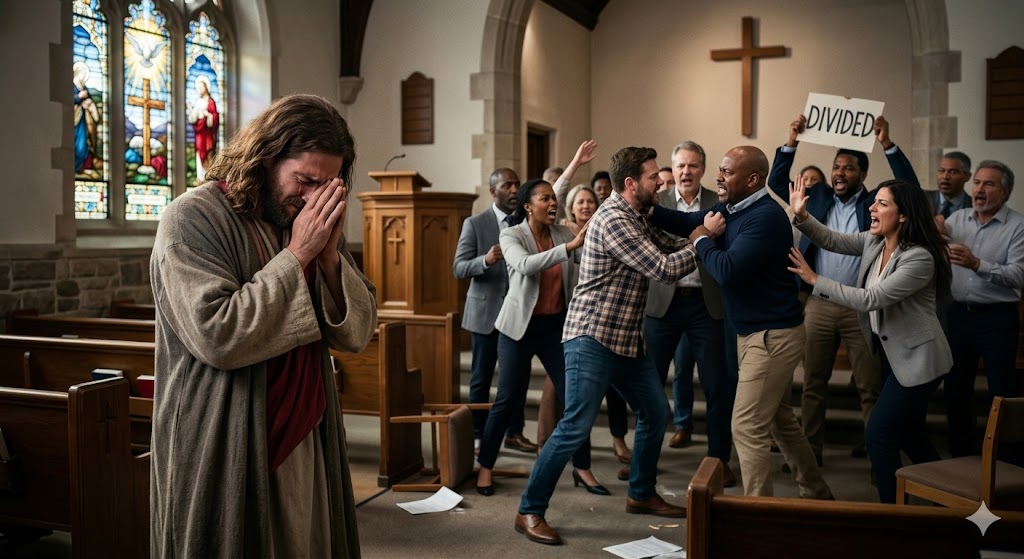
We marvel that we live in a time
when churches and synagogues are no longer considered sanctuaries from the evil
in the world. Mass shootings, bombings, arson have all become familiar methods
of attack against churches. The presence of armed parishioners and even police
have done little to deter those who would do harm. But when we have already
opened the door to violence against one another through our dysfunctional grasping
for power and wealth, have we not forfeited any hope of divine protection? Our
open hostility, or even simply our disdain for those who do not have what we
have in terms of education, wealth, power, or legacy family connections destroy
the foundations of security that support us all.
We make excuses for church
dysfunctionality with trite sayings like, "Church is not a rest home for
saints. It is a hospital for sinners." While seemingly stating the obvious, it
is a recipe for continuing dysfunction. If the church is functioning as it is
supposed to, there is no need to change anything. Those in power can continue
in power. Those greedy for gold can continue. Those cheating on spouses can
continue to do so. After all we are not expected to be saints. And we have
plenty of other things to focus on, trivial non-salvific things like what we
should eat or wear. That should keep us busy until Jesus returns. Oh, and let
us argue over who can and cannot be ordained based on gender. That should keep
us fighting for centuries. In the meantime, we will be so focused on keeping
what we have that we will not have time to see who is behind the curtain
pulling the levers and manipulating everything as the sham, all-powerful Wizard
of Oz.