
Stephen
Terry, Director


Persecuted
but Not Forsaken
Commentary
for the January 3, 2026, Sabbath School Lesson
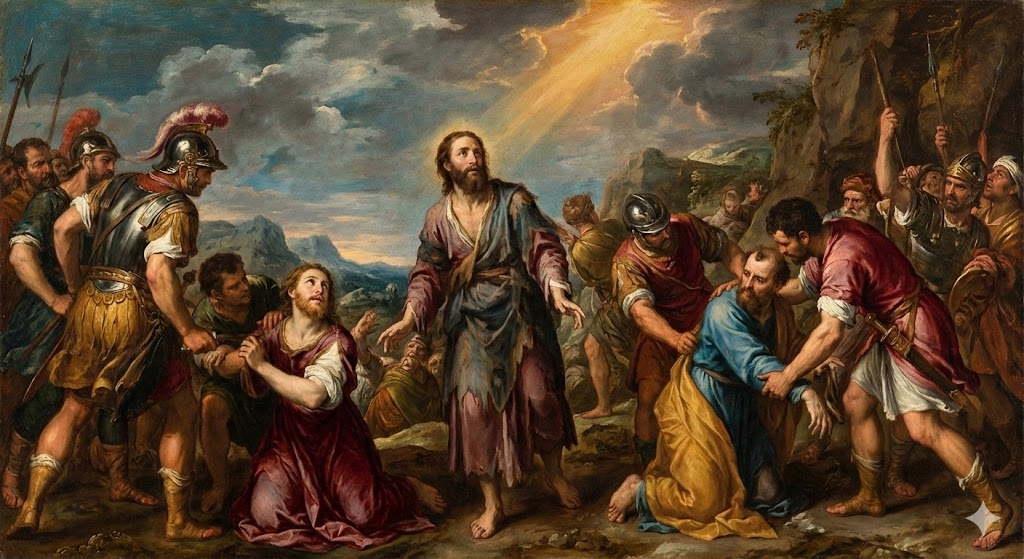
As I
write this, we are beginning a new year as the Christmas season draws to a
close. It is a season when ersatz Christians claim they are being persecuted because
stores and governmental agencies say, "Happy holidays!" instead of "Merry
Christmas." Perplexingly, it is also a time when others, who think they are God's
favorite Christians, attack other Christians for even declaring that there is
anything Christian in the celebration of Christmas. Everyone has an opinion,
and everyone thinks they are under persecution for either celebrating or not
celebrating Christmas. I can almost see the Christians of the first through the
third centuries shaking their heads and asking, "You call THAT persecution?!?" The
blood of so many martyrs cries out from the dirt floor of the Colosseum in Rome
where it watered the ground through horrific acts much worse than daring to say,
"Merry Christmas."
Does
this mean persecution is unknown in the modern church? Hardly. The Apostle Paul
even says it will always be with us. He tells his assistant, Timothy, "Everyone
who wants to live a godly life in Christ Jesus will be persecuted." (2 Timothy
3:12) And to the church in Rome, he wrote, quoting Psalm 44:22, "For your sake
we face death all day long; we are considered as sheep to be slaughtered." (Romans
8:36) The attitude of too many of those who claim they are being persecuted
today is like a cranky child who is told to take a nap and throws a tantrum in
response. It only proves the need for a nap, not the cruelty of the one
suggesting that rest. Should real persecution come, those who tremble at
hearing "Happy holidays!" will be gone from the faith for if they quail at such
simple things, how will they stand in the breaking tempest of actual hostility?
What
is that like? Unfortunately, we are not a nation of great readers. According to
the National Literacy Institute, 54% of adult Americans read at less than a
sixth-grade level. Since these commentaries are written at a high school level
that means that over half of adult Americans would struggle to read them.
Fortunately, the Bible in a modern translation, such as the New International Version,
is written at a fifth-grade level or less. It can be read and understood by
most. Considering the depth of meaning that can be derived from its pages, its
simplicity still provides fertile ground for contemplation by the greatest
intellects who never exhaust the lessons to be found in its pages. Nonetheless,
in the Bible are examples of murders, stonings, and imprisonments suffered
under genuine persecution. If that is not enough, Foxe's "Book of Martyrs"
takes us well into the early church and the horrendous deeds done through the
ages to those who dared to see their fellow human beings as precious in God s
sight and not as mere brutes, subject only to humiliation and degradation,
forced to live in fear of those who would oppress them.
Then as
now, the wealthy and powerful saw the rest of humanity as only raw material to
be exploited. Over six hundred thousand died in the American Civil War fighting
to free the nation from such abuse. When people continue to see others as mere
objects to be abused and perversely enjoyed because they have power over their
victims that seems unchallengeable, it reveals that war against inhumanity
toward others has not been won. How strange it is that in a world with enough
resources to feed and clothe everyone, so many should go hungry and naked, or in
a world where there are more vacant homes than there are homeless people,
anyone should be homeless. How strange that Christians, who claim to believe that
all are descended from a single couple based on the
account in the early chapters of Genesis, should not see all human beings as brothers and sisters, deserving to be
treated as equals. There is no justifiable reason for persecution of
others.
How
do I know of persecution? In the United States we no longer have the mass
murder of martyrs that continues to plague other countries around the globe.
However, that does not mean that persecution does not exist. It is alive and
well and does not need to be manufactured by Christmas hating zealots. My own
life is an example. I served over six years during the Vietnam War era as a
medical corpsman. I was a conscientious objector. I did not carry a weapon
because as a follower of Christ, I did not believe in taking the lives of
others. At times, others would try to provoke a violent response from me,
thinking they would expose hypocrisy. When that failed, they turned to violence
themselves. I was not alone in their attentions. A private, who was a
practicing Pentecostal, fell down the stairs and was one day gone. I never knew
what his fate was. After him, they also turned on a man two ranks higher than the
private. He was a Jehovah's Witness, and they coerced him into publicly renouncing
his faith.
When they
came after me, it was a more difficult challenge because I was a non-commissioned
officer, granted that promotion in Vietnam despite not carrying a weapon.
However, the war had ended with the signing of the Paris Peace Accords in 1973,
and by 1974, some higher-ranking officers saw conscientious objectors as
traitors without regard to lives they saved or the necessity for medical care
during a war. Desmond Doss, who won the Congressional Medal of Honor as a medic
without carrying a weapon was another war and already forgotten. As a Seventh-day
Adventist, I had served faithfully and honorably both stateside and in Vietnam
and even became a paratrooper. Other than not carrying a weapon, the only thing
that seemed to others to set me apart was Sabbath observance from sundown Friday
to sundown Saturday. Since Saturday drills had become outdated, there was
little reason for friction over religion.
That
all changed when I was transferred to Alaska. In Alaska, the sun went down in
the winter shortly after noon on Friday which cut significantly into the duty
day. Army commanders have the discretion to allow personnel to have time off for
religious observance. Although I did not need to before the transfer, in Alaska,
I asked for that permission. That was in the same battalion that had persecuted
the Pentecostal and the Jehovah's Witness. Since my request was reasonable and
I had served in a war zone and was a paratrooper, considered an elite status,
and my company commander had even attended my wedding, I did not anticipate a problem.
However,
once I made that request, things blew up quickly. Battalion command group did
their research well and finding that Seventh-day Adventists do not eat pork.
Bacon suddenly started appearing in everything in the mess hall, from mashed
potatoes, to peas, and to the point that I was reduced to eating white bread
and drinking milk for meals. As I said, my company commander was a friend, and
he approved me for separate rations which provided enough income to purchase my
meals elsewhere. I appreciated his intervention, but that was of limited help
while we were out in the field. Even buying freeze-dried
soups and vegetables, I could only carry so much and eventually ran out when on
extended bivouacs. I taught myself how to identify edible plants to carry me
through. Commands response was to bivouac on a glacier where there is nothing
growing, and when I went to the edge of the glacier to forage, they charged me
with disobeying and took away my rank. During that same field exercise, someone
tried to take me out by hitting me in the head with a huge rock. The only thing
that saved my life was the helmet liner I was wearing. I still bear the scar
and the dent in my skull to this day. This was one of several attempts on my
life. I do understand what real persecution is like. In part, it is why I find
myself more in common with the early church than with the Laodicean church of
Revelation. (Revelation
3:14-22)
The
important take away from my persecution experiences is one I think that those
early Christians would agree with. Through every trial, every accusation, every
violence perpetrated against me, God did not forsake me. With the assistance of
my company commander and the Pentagon, who saw merit in the argument as to why
all the persecution? If the Army no longer wanted my honorable service, why not
simply let me go? The Pentagon agreed and ordered my immediate honorable
discharge. This did not stop one last attempt on my life, but God, who often
steps in at the very last moment with his deliverance, thwarted that attempt as
well. That is why I am here to share this. I have personally experienced what
David the Psalmist wrote, "Yea, though I walk through the valley of the shadow
of death, I will fear no evil: for thou art with me." (Psalm 23:4a, KJV)