
Stephen
Terry, Director


Standing
in All the Will of God
Commentary
for the March 28, 2026, Sabbath School Lesson
 "Live
in harmony with one another. Do not be proud but be willing to associate with
people of low position. Do not be conceited." Romans 12:16
"Live
in harmony with one another. Do not be proud but be willing to associate with
people of low position. Do not be conceited." Romans 12:16
What is God's will? For
thousands of years humanity has looked to understand the answer to that
question. Some say it can be found in catechisms and homilies. Others say it
can be found in councils, conferences and committees that hammer out exhaustive
tomes of uniformity based on detailed dogmatics, creeds that sort "them" from "us."
While things are chaos elsewhere, we feel God is here with us as we strive to
look, act, and talk the same. Our success at appearing to conform must be
indicative of the state of our sanctification, our progress toward perfect
righteousness, or so we feel.
Where do material blessings fit
into that picture? Prosperity preachers tell us that those blessings are
evidence of a close relationship to God, proof that we are walking in His will.
As further proof they point to their own material success. After all, if God
blesses the righteous, wouldn't he bless the preachers of that righteousness
the most? But how does one tell the difference between this and the blessings
of being at the top of the chain in a multi-level marketing scheme? Don't the
texts say, "Beloved, I wish above all things that thou mayest prosper and be in
health, even as thy soul prospereth." (3 John 2, KJV) and doesn't God want to
bestow on us a "crown of beauty instead of ashes?" (Isaiah 61:3) Who are we
then to refuse all those blessings if God wants to give them?
Others say it is God's will for
us to withdraw from society and live in seclusion in the mountains, growing our
own food and developing an off-the-grid self-sufficiency. This avoids pollution
by impure thoughts and actions on our part and protects us from those who would
do us harm. But there is no safety. As Edgar Allen Poe pointed out in his "Masque
of the Red Death," evil will find a way in and seclusion, prosperity, even
carefully constructed dogmatics are no barrier to death when he comes calling.
Death stalks us all and will have us in the end, and no one knows the day or
the hour. As Solomon opined repeatedly in Ecclesiastes, all is vanity in the
face of that universal truth.
So, is that it? Is it God s will
that our candle flickers for a brief instant and snuffs out, wax and wick
unable to prevent that approaching darkness? That seems a sad end to a futile life
that according to Shakespeare is only "sound and fury, signifying nothing."
(Macbeth, Act 5, Scene 5) But God offers a counterpoint to Shakespeare's
assessment and even Solomon's depressing assertions. King David sang of it, "When
I consider your heavens, the work of your fingers, the moon and the stars,
which you have set in place, what is mankind that you are mindful of them,
human beings that you care for them? You have made them a little lower than the
angels and crowned them with glory and honor. You made them rulers over the
works of your hands; you put everything under their feet: all flocks and herds,
and the animals of the wild, the birds in the sky, and the fish in the sea, all
that swim the paths of the seas." (Psalm 8:3-8)
To learn God's purpose, we need
only look around, just as David did. There is such a diversity of life that
surrounds us, and the interconnection of all of it is readily apparent. Who has not looked into the eyes of a beloved pet
and felt the connection as life shines forth from their eyes to embrace the
life that is in our own? There is a depth to that ocular link that binds hearts
and breaks them when the link is broken in death. That life, that spark is from
God, and it is why we are told that death is an enemy. (1
Corinthians 15:26) It wages war against everything God wills. He wills for
us life. Death would deny us. He wills for us loving relationships. Death would
sever all of them.
In answer God promises eternal
life, but he also instills in humanity and to a similar degree, every living
thing, a genetic resilience in the face of death's predations that has allowed
us to persevere despite plagues, famines, wars, and many other potential extinction
events. The key to that is God's love for diversity. God desires diversity's
proliferation. Why would he create so much of it if he did not? The more we
understand our own biology, the greater the amazement about our capabilities.
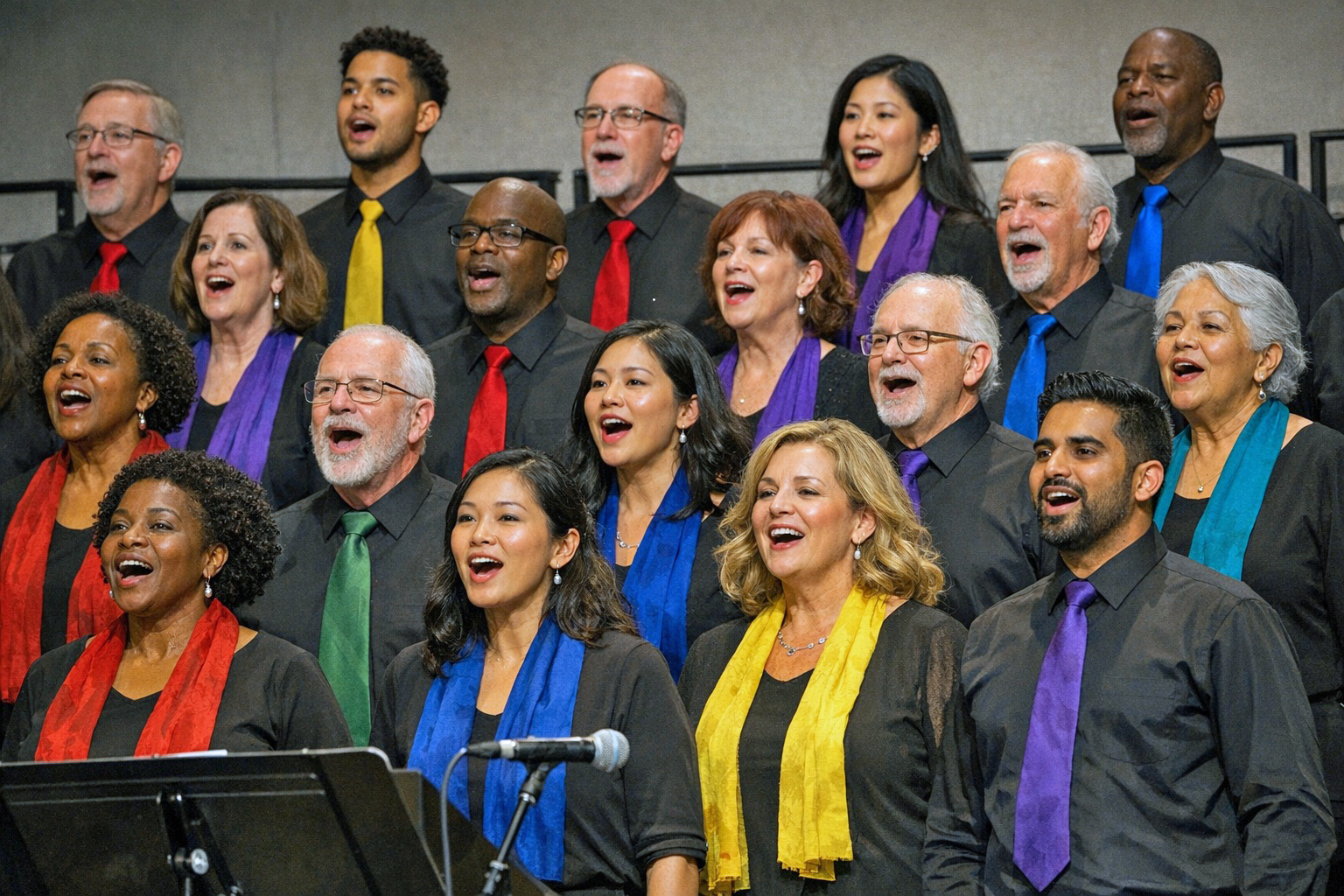
The picture accompanying this commentary is generated by ChatGPT. The people do
not exist in real life. Despite its efforts, the AI engine cannot come anywhere
near God's ability to create diversity and falls back on repetitious imagery to
fill the gap. But where AI stumbles at representing actual human diversity when
challenged to produce a dozen images, God excels with over 7 billion human
beings, each unique and capable of adding something distinct to humanity's
achievements.
Unfortunately, despite the
obvious intent on God's part to extoll diversity as healthy and desirable,
there are those who feel that God's will is to favor one group of people over
all others based on race, culture, or gender. They do not understand the
amazing gift God has given us in our genes and sow the seeds of their own
destruction by trying to remove that diversity from the gene pool. My first
wife slowly died from a chronic disease, Multiple Sclerosis. It was horrible to
experience that loss and be powerless to abate the disease's progress. But now
they have treatments thanks to genetic research and development. I have also received
help from genetic research that has produced biologic treatments for ongoing
immune disorders. Limiting the gene pool to only certain races or cultures
would make development of these biological medicines far less likely to be
discovered. In a world contaminated by so many pollutants that attack our
immune systems these medicines offer hope, especially since the earth continues
to struggle to survive under the onslaughts of those who would destroy
everything if they could make a few cents while doing it.
With so many billions walking
the planet, we take the miracle of life for granted, not fully realizing how
that ties us to one another and to a common future that can be either the
greatest hope for humanity and all life on the planet, or the dysfunctionality
that kills us all. God is all about life and wills that we live, even to the
point of resurrecting the dead though they be nothing but dry bones. (Ezekiel
37) As Karl Barth pointed out in his commentary on Romans, chapter 8, all
of Creation understands that and waits for its realization. Only humanity seems
oblivious to that even though Creation's hope is pinned on mankind's
redemption, resurrection, restoration, and re-creation.
"For the creation waits in eager
expectation for the children of God to be revealed. For the creation was
subjected to frustration, not by its own choice, but by the will of the one who
subjected it, in hope that the creation itself will be liberated from its
bondage to decay and brought into the freedom and glory of the children of God.
We know that the whole creation has been groaning as in the pains of childbirth
right up to the present time." (Romans 8:19-22)
"Listen, I tell you a mystery:
We will not all sleep, but we will all be changed--in a flash, in the twinkling
of an eye, at the last trumpet. For the trumpet will sound, the dead will be
raised imperishable, and we will be changed. For the perishable must clothe
itself with the imperishable, and the mortal with immortality. When the
perishable has been clothed with the imperishable, and the mortal with
immortality, then the saying that is written will come true: 'Death has been
swallowed up in victory.'" (1 Corinthians 15:51-54)
The will of God is not so low as
to only wish for us material blessings and prosperity. It is not so low as to
only wish us to subscribe to repetitious litanies of carefully constructed
dogmas to prove publicly that we are God's chosen remnant. God's will was for
Jesus to make it possible for us to have fullness of life as we were created to
enjoy. (John
10:10) This life is a mere shadow of that one. Shadows are created when
light is blocked. But the life God intends is filled with light. Only one thing
can make life that full. It is love. God poured his love into the world through
the incarnation of Jesus. (John
3:16) This was the revelation of the essence of God's character for "God is
love." (1 John 4:8)
One thing that this life should
teach us: heaven isn't heaven without love. And no matter how much we might wish
for it, this is not heaven, and no theologian, no politician, no general, no
oligarch has the love or the power to create heaven here. Though many have tried
to force their idea of a perfect world upon us, they have always failed on that
single point--love. Instead of an ersatz, cardboard heaven that condones
exploitation, discrimination, oppression, and criminality, why don't we look
for the real thing? That is God's will for us.