
Stephen
Terry, Director


Unity
Through Humility
Commentary
for the January 24, 2026, Sabbath School Lesson
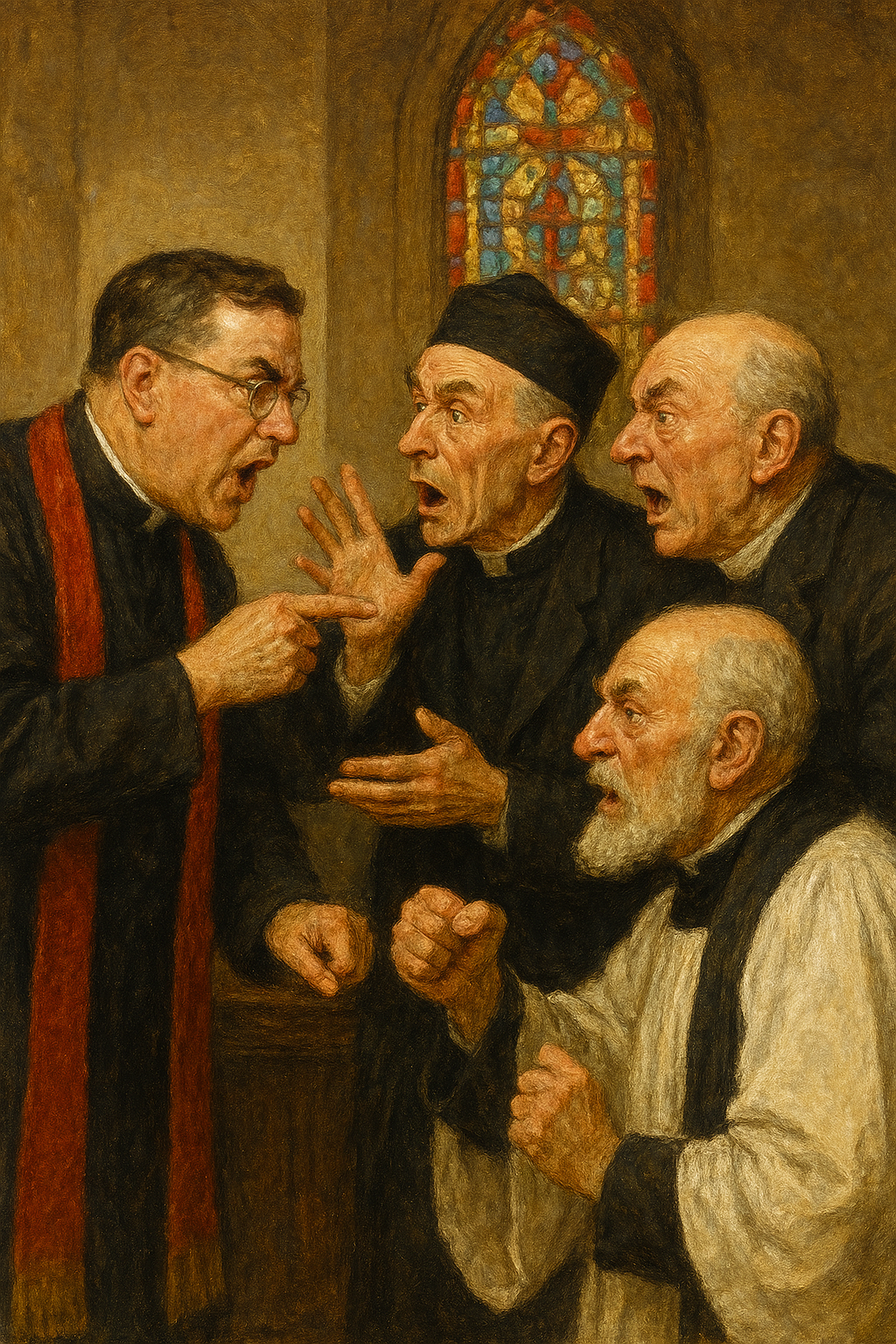 "What
causes fights and quarrels among you? Don't they come from your desires that
battle within you? You desire but do not have, so you kill. You covet but you
cannot get what you want, so you quarrel and fight. You do not have because you
do not ask God. When you ask, you do not receive, because you ask with wrong
motives, that you may spend what you get on your pleasures." James 4:1-3
"What
causes fights and quarrels among you? Don't they come from your desires that
battle within you? You desire but do not have, so you kill. You covet but you
cannot get what you want, so you quarrel and fight. You do not have because you
do not ask God. When you ask, you do not receive, because you ask with wrong
motives, that you may spend what you get on your pleasures." James 4:1-3
Two thousand years ago, Jesus
had twelve male followers who came to be known as apostles. Some were drawn to
him, others he called. They came from varied backgrounds. By no means did they constitute
the entire body of those who accepted Jesus as the promised messiah. Other men
followed him publicly like Zaccheus and Lazarus or privately like Nicodemus.
Women also were drawn to his ministry, women like Mary, Martha, Joanna, and
Susanna. While we might be tempted to read some sort of organizational chart
into this milieu with Jesus at the head, the apostles at the next layer, the
other men below that and the women at the bottom, this would be imposing authoritarian
and gender-based interpretations on scripture that are unjustified and
inaccurate. Jesus did not see the kingdom of God through that lens.
This is one of the many remarkable
things Jesus modeled--remarkable because it flew in the face of the tabernacle
system introduced by Moses. That system was very stratified and excluded women
from positions of authority to the extent that those women, like Deborah or Jael,
who achieved fame, were remembered because they were such an exception. The
tabernacle was overseen by a high priest who reigned over the Aaronic
Priesthood, who in turn were overseers for the Levites who maintained the
tabernacle services and properties. Below these would be the tribal leaders and
their tribes with men considered the heads of every household rather than
women. This, as in the more modern concept of Headship Theology, was to be the
divine order of things based on what were considered the curses of God after
the Fall of humanity in Eden.
When God stated to the unfortunate
couple, Adam and Eve, what would be the result of their distrust in his
counsel, the text is not entirely clear what was a curse from God and what was
simply God telling them how people with this new knowledge of evil would treat
each other. Eventually, fallen man would discover that his greater strength
would permit him to dominate women. Women would either wilt under that
domination and devolve into little more than private property of the men, or
they would find ways to become independent, at times stepping in where men
failed to stand for the right. This flawed and oppressive system continued for centuries.
It was incapable of producing an antidote to the Fall. If anything, it
magnified its detrimental results. It encouraged revenge, hatred of one's
enemies, and subjugation of one gender by another. It got so bad that by the
time of King David and King Solomon, the wealthy male could have dozens of women
subject to his whims whether those whims were good or evil. And why not? They
were only property after all, a fitting punishment for causing the Fall and
like Pandora, letting evil into the world.
But then came Jesus, and all of
that was set on its head. He revealed that the evil was not the fault of the
woman any more than it was the fault of our own stony hearts. Why did Moses
allow divorce if the women could not be put away for their evil? Because men's
hearts were cold and hard toward their wives. (Matthew
19:7-8) The people saw divorce as a privilege that a man could exercise
over a woman. Whatever displeased him in the slightest could be the basis for casting
her out and this was believed to ensure that the woman would remain always in
subjection to her husband. Since she had no property rights of her own, her
sustenance was dependent upon her husband's goodwill. Jesus' challenge to this
understanding was understood as a challenge to everything
that society was based upon and a challenge to the laws Moses established under
inspiration from God. They neither recognized the messianic divinity in Jesus
nor the coldness of their own hearts. Headship Theology would have us return to
that world, erroneously believing that God would be pleased to see our stony
demeanor toward the women in our lives. In holding to that perspective, they
also deny that Jesus is the Messiah of promise. It is not merely coincidental
that there is considerable overlap between those who hold that view and those
who also deny the full, underived divinity of Jesus.
So, what does this have to do
with unity through humility? Not long after Jesus' ascension, his followers began
to depart from their calling to the servant priesthood he inaugurated and back to
the hierarchical model they were all familiar with from the Torah. Not everyone
did, because according to the Canons of the Council of Laodicea in the last
half of the fourth century, they found it necessary to outlaw the ordaining of
women. This means that some groups of Christians must have continued the
egalitarian practice of their faith for centuries after Christ. This was
despite places in Paul's epistles that evinced hostility toward women. Paul was
a strange apostle. He was born out of time despite the apostles already
electing a replacement for Judas in Matthias. Paul's calling was not witnessed
by any of the other apostles, nor were they even aware of his ministry for
years after his Damascus Road experience. While the rest of the apostles
continued to live by Jewish practice, Paul was preaching a new gospel that
disavowed circumcision, something still novel when Paul presented the idea to
the brethren in Jerusalem almost two decades after Christs death and
resurrection.
It cannot be gain said that Pauline
theology shaped the dogma of the early church even though, as Peter said, it
exceeded the understanding of some. (2
Peter 3:14-16) It is Paul's epistles that describe and encourage a
hierarchical clergy as we have even to the present. This stratification
promoted the striving for position and power that continues to plague the
church. The apostles established the deaconate with the special ordination of
Stephen and six others to positions of servant leadership within the body of believers
at Jerusalem. But Paul's epistles go further with elders and bishops. While Peter
says we all are ordained to a royal priesthood (1
Peter 2:9), a more egalitarian stance, Paul effectively says as Orwell did
in "Animal Farm," "We are all equal, but some are more equal than others." On
the one hand, he teaches in Romans, Galatians, and Ephesians that we are a
kingdom of grace, no longer under condemnation, but we are nonetheless bound to
one another in a culture of privilege and power where those at the top fight
for ever more power and prestige, while those at the bottom are encouraged to
forsake that struggle and be resolved to a life of humility and service. Service
to whom? To those in power of course. While we have free will and can walk away
from all their demands, the brand of heretic or backslider may become our identity.
While caring for my first wife while she was dying, I had an extended absence
from church attendance. Rarely did anyone visit, not even the pastor. After my
wife died, I resumed attendance where other members informed me, "We heard you had
backslidden." Despite such rumors, no one had bothered to find out the truth.
My only fault was my inability to be present to serve the desires of the
church.
This is the way in the hierarchical
church that Paul initiated. It is the church that grew from his theology and
the various church councils over the centuries. While Protestants take pride in
their separation from Rome, much of their church structure and governance
continues to model Paul's perspective and to the degree that Paul was raised a Pharisee
and learned at the feet of Gamaliel, it echoes the teachings of Moses and the
Torah with a Pharisaical flavor. At times, the two seem to clash in his
letters. We have the beautiful statements he makes in (1
Corinthians 13) were love is above all things, but then we also have the
harshness in the very next chapter of "If they want to inquire about something,
they should ask their own husbands at home; for it is disgraceful for a woman
to speak in the church." (1 Corinthians 14:35) It begs the question whether
Paul would have rebuked Mary Magdalene for bursting into the meeting of the apostles
after Jesus' death to announce the empty tomb.
While this quarter is focusing
on two of Paul's epistles, we are well advised to remember that his letters reflect
Paul's character and his perspective. Whereas, the character of God is most accurately portrayed in the words of Jesus as shared
in the gospels, especially the gospel of John, and John's epistles reflect that
character exceedingly well. This does not mean that God did not use all the apostles
in numerous ways just as he uses each of us, but none of us has the full understanding
of God's character that Jesus has. Otherwise, his sending of the Holy Spirit to
instruct us further would have been pointless.