
Stephen
Terry, Director


In
the Psalms: Part 1
Commentary
for the May 24, 2025, Sabbath School Lesson
 "I hate, I
despise your religious festivals;
"I hate, I
despise your religious festivals;
your
assemblies are a stench to me.
Even though you bring me burnt offerings and grain
offerings,
I will
not accept them.
Though you bring choice fellowship offerings,
I will
have no regard for them."
Amos 5:21-22, NIV
When
the Israelites were wandering in the wilderness between Egypt and Canaan, they encountered
poisonous snakes, and those bitten by the snakes found it to be a mortal
injury. Instructed by the Lord, Moses created a bronze snake and hung it on a
pole. Those who looked upon the image would recover. Those who refused
perished. (Numbers
21:4-9) Centuries later, during the reign of King Hezekiah, that image was
still around and had been turned into an idol called Nehushtan. To stop the
idolatry, Hezekiah had it destroyed. (2
Kings 18:1-4) It was created for a certain time and purpose that had long
since been fulfilled. The people chose to live in that time and place and had
not moved on. Making it an idol, it showed how far they had wandered, serving
the man made rather than the true God.
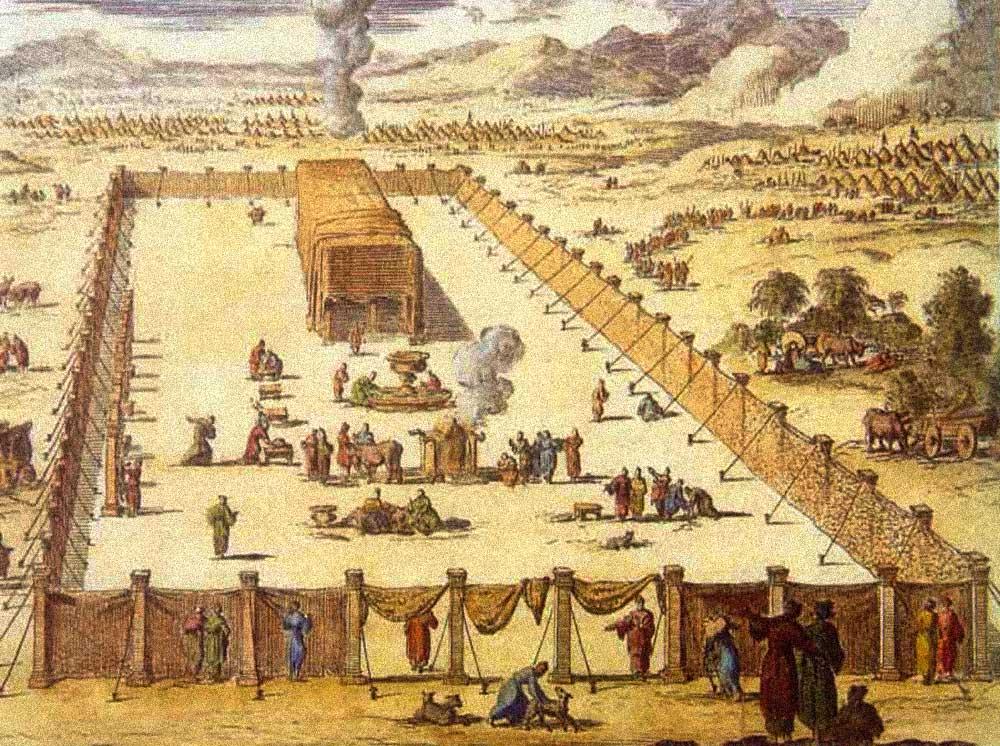
The
wilderness tabernacle and the temples in Jerusalem were also made for a particular
time and place. But like Nehushtan, the people came to worship the temple as
something more than the God who should have been worshipped. But the weeping
prophet, Jeremiah, said the temple was not enough to save anyone and trusting
in it was in vain. (Jeremiah
7:3-4) He went on to say, "If you really change your ways and your actions
and deal with each other justly, if you do not oppress the foreigner, the
fatherless or the widow and do not shed innocent blood in this place, and if
you do not follow other gods to your own harm, then I will let you live in this
place, in the land I gave your ancestors for ever and ever." But the people
could not see past the temple, and rather than change their ways, they
persisted in evil. When Nebuchadnezzar of Babylon came to take Jerusalem, some
of the hardest fighting was around the temple. The same people who had
oppressed others and shed the blood of innocents now believed that if they
defended the temple, the sanctity of that place would somehow deliver them.
Instead, the temple built by Solomon that they had come to idolize was burned
to the ground and the city around it was leveled. Even as the Babylonian king's
army surrounded the city, had they followed the counsel of Jeremiah, the city
and even the temple might have been spared. Those who survived went into
captivity.
Had
they learned their lesson? They no longer created idols to worship. But one of
the early things the returned exiles did when they reinhabited Jerusalem was to
build another temple under the leadership of Zerubbabel. That temple stood
until King Herod built a much larger temple around it. However, although the
people no longer worshiped idol statues, idolatry of the temple grew over time.
Even Christ's disciples praised the temple to Jesus. (Matthew
24:1) Recognizing their idolatry for what it was and wishing to steer them
to God and not to things made by humanity for their salvation, he pointed out,
"Do you see all these things? Truly I tell you, not one stone here will be left
on another; every one will be thrown down." (verse 2) The power of this
idolatry over the early church was so overwhelming that even after the cross,
resurrection, and ascension, they continued to offer sacrifices at the temple
despite the efficacy of the cross. They even persuaded Paul to offer sacrifices
to prove that he still honored the temple. (Acts
21:22-26) This turned out to be a trap that Paul found himself caught in.
Arrested, he was accused of violating the temple precincts by those who
idolized the temple and rejected Jesus as the Messiah. His naive willingness to
continue offering sacrifices, even though his epistles to the churches taught
otherwise, ensnared him with years of imprisonment and trials. Eventually, he
lost his head at the order of the emperor Nero.
Jesus
foretold the destruction of the temple, just as Hezekiah had destroyed
Nehushtan. It was not just retribution for the people's arrogance, greed, and
oppression of the weak and foreigners. The temple was no longer necessary. The
antitype had come. The type must cease that Christianity could grow and thrive.
The temple and its predecessor, the tabernacle, were abattoirs. Untold and vast
numbers of animals shed rivers of blood in their precincts from the time of
Moses until decades after Jesus' ascension. The stench of blood and offal mixed
with animalian terror before the slaughterer's blade must have been
overwhelming. Then after the bloody deed was done for each creature, the people
and the priests were commanded to eat the meat and to burn a portion on the
altar. The people having developed a belief that all of this was necessary for
their salvation, the rites went on for centuries. But the temple could not save
anyone. It was only a constant reminder that as it was with the animals, so it
is with us. We will all die, and others will consume whatever earthly goods we
leave behind. It is not about salvation. It is about the horridness of our lot
because of the degradation of humanity. "It is impossible for the blood of
bulls and goats to take away sins." (Hebrews 10:4) Even though those sacrifices
were performed following Torah, God did not desire them. (Hebrews
10:6) But just as with the people worshiping Nehushtan, others today are
bent on finding salvation through the temple or tabernacle sanctuary, the type,
rather than the antitype, Christ our savior. Despite the destruction of the
temple, and despite the gift of the Messiah, they still look to the type to
define the antitype instead of the other way around.
Even
though they had the wilderness tabernacle, it did not prevent the Israelites
from wandering for forty years. All those sacrifices for decades could not
deliver them because they would not allow their characters, their desires,
their practices to be changed as would happen had they sincerely reached for
the hand of God during their travels. Therefore, without that direct, personal
interaction with God, they lived lives of fear, a fear they thought they could
assuage by outwardly following all the rules while inwardly bereft of the love
that God intended they should have been endowed with through creation in his
image, the image of love. (1
John 4:8) Fear has been integral to sin since the beginning when Adam and
Eve hid from God's love after the Fall, afraid to stand in his loving presence.
There are those, even in the Bible, who tell us we must fear God. But there is
nothing to fear from love except that love will drive out our fears. (1
John 4:18) When we consider how our fears have destroyed our health and our
peace of mind, why would we cling to them?
Our
world today is caught in the grip of abject fear. We fear the foreigner. We
fear people on the right of the political spectrum and those on the left. We
fear science, and we fear ignorance. We fear our government but also fear
losing the benefits government provides. We fear the loss of this world's
goods, so we insure everything, even though eventually we lose everything
anyway, unable to outlive our possessions as they go to others. Losing
ourselves in rituals and sacrifices will not remove those fears. It may take
our minds off our plight, but the fear remains. And repressed fear will have
its out, often at the expense of relationships.
God
does not want us to live in fear. He does not want us to fear him or our
neighbor. This is why when quizzed about the commandments, Jesus shared that
the two that really mattered were to love God with all our heart and with all
our soul and with all our mind and to love our neighbor as ourselves. Until we
bring God into our lives to lead us to love, we are just like those ancient Israelites,
wandering in fear in the wilderness and never finding the rest from that fear.
God rested in the beginning as only love can. We cannot rest in fear, but God's
rest on that first Sabbath was and still is the type for that rest in the hope
that we might enter in, not through the ministry of the Sanctuary, but through
the personal presence of the Holy Spirit in our lives, leading us to the
ultimate truth that love is the only path to be what we were created to be.
Wealth, power, and control will not provide it. We need to turn from fleeing
from God in fear and walking toward him to discover the love that has always
been there. Those who do, will discover why the 23rd Psalm has such
a powerful portrayal of our potential and what our relationship to God might
be:
"The
Lord is my shepherd; I shall not want. He maketh me to lie down in green
pastures: he leadeth me beside the still waters. He restoreth my soul: he
leadeth me in the paths of righteousness for his name's sake. Yea, though I
walk through the valley of the shadow of death, I will fear no evil: for thou
art with me; thy rod and thy staff they comfort me. Thou preparest a table
before me in the presence of mine enemies: thou anointest my head with oil; my
cup runneth over. Surely goodness and mercy shall follow me all the days of my
life: and I will dwell in the house of the Lord forever."