
Stephen
Terry, Director


Ruth
and Esther
Commentary
for the June 14, 2025, Sabbath School Lesson
 "No Ammonite
or Moabite or any of their descendants may enter the assembly of the Lord, not
even in the tenth generation."
"No Ammonite
or Moabite or any of their descendants may enter the assembly of the Lord, not
even in the tenth generation."
Deuteronomy 23:3, NIV
While
our lesson this week focuses on Ruth and Esther, I do not understand why, of
all the strong women in the Bible, these two were singled out. Perhaps it is
because of their willing subservience to patriarchy. Deborah would certainly
not fit that model. And Rahab was a prostitute, to include her would cause all
the modern Simon the Pharisees to cry out that no Christian would have anything
to do with her because of her history. (Luke
7:36-50) Proverbs 31 relates what a perfect woman would be, but it also
begins by pointing out that such women are difficult to find and rare as
rubies. In the world I inhabit, women are no worse than men in character and no
better. The Fall out of grace has affected each gender, everyone, similarly.
All are fearful, greedy, impatient, unkind, disrespectful, and so on. (Romans
3:23) It is not my purpose to lay out an exhaustive list of the sins of
humanity, for they are many.
Ruth
will be our focus for this commentary. While Ruth was not a prostitute, she had
something worse condemning her. During a famine in Israel, Naomi and her family
had traveled to Moab in hopes of finding enough food to sustain themselves. Her
husband, Elimelek, meaning my God is king, died while in Moab. Her two sons
married Moabite women, Ruth and Orpah. These two sons died also, leaving only
the women to fend for themselves in the patriarchal levant. Naomi heard that
things had improved in Israel and decided to return to seek out family and support.
Of the two daughters, Orpah decided to remain in Moab, but Ruth declared she
would follow the God of Israel and her mother-in-law, hoping for a better
future, a future she was willing to work to secure for her and Naomi.
So,
what was Ruth's big flaw? She was a Moabite, forbidden by Torah to be a part of
the assembly of the Lord. She had no right to expect to be received by Naomi's
family, and her presence would throw a shadow on Naomi's character as well.
Nonetheless, the two traveled to Bethlehem, and Naomi's appearance with this
Moabitess caused quite a stir. Naomi was old, past childbearing age. (Ruth
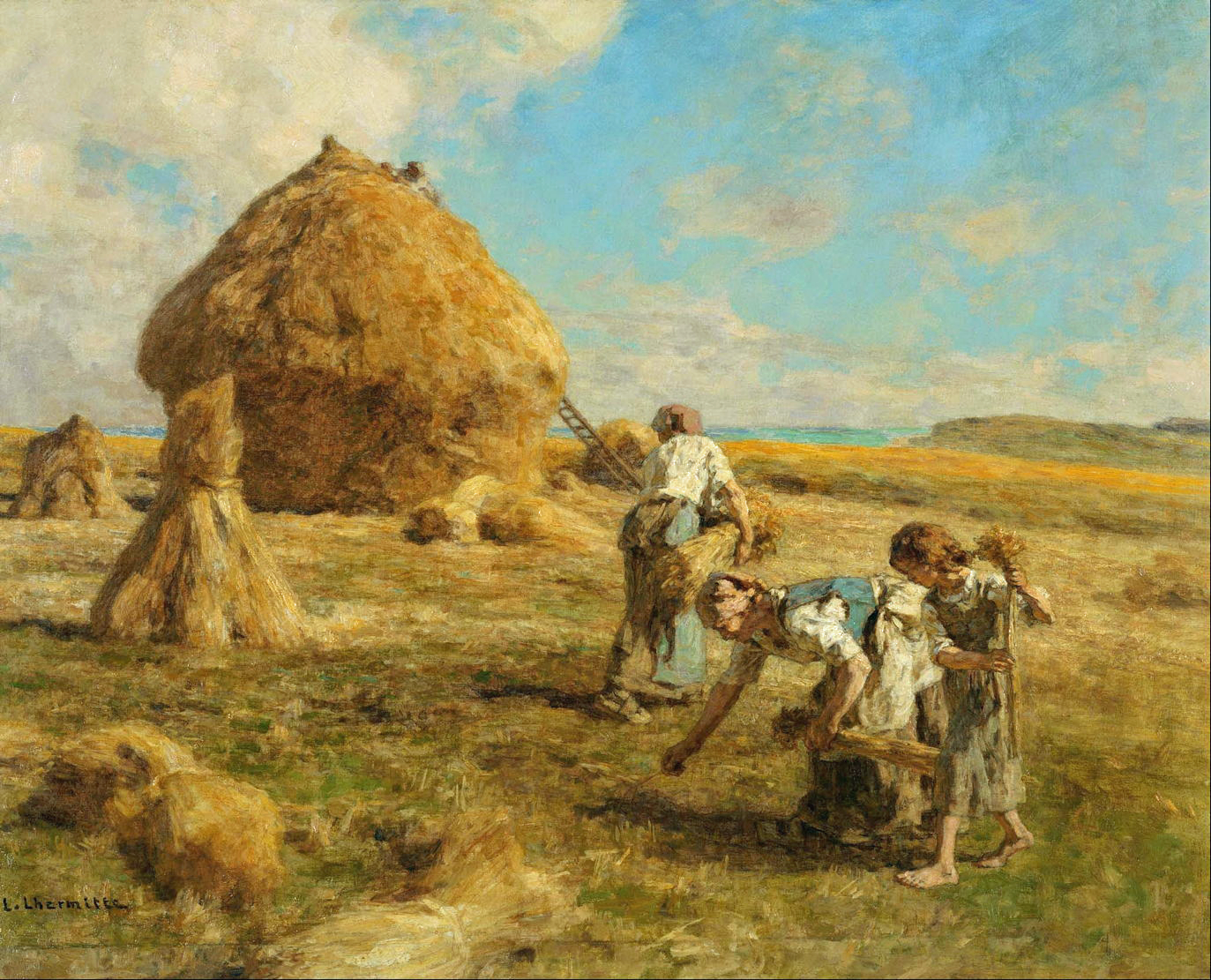
1:11-13) But Ruth was young enough to go out and glean the left-over grain
in the fields after the harvesters had gathered what they chose. When the owner
of the field, Boaz, came to oversee the harvest. He asked about her, and the overseer
of the field crew pointed out that she was a Moabite. According to Torah, that
should have ended Boaz's interest in her, but he was made of different stuff,
and his heart went out to her for the hardship she and Naomi had endured. (Ruth
2:11) Ruth knew that as a Moabite, she had no right to expect such kindness
and compassion from an Israelite like Boaz. (Ruth
2:13) Even a servant who was an Israelite had more standing than her.
We
think of the story of Ruth as a romance between her and Boaz because they
eventually married. But it is more than that. Boaz's compassion was not simply
based on physical attraction to Ruth. He lived according to a different part of
the Torah. While Deuteronomy forbade Moabites entry into the Israelite
assembly, elsewhere in the same book, it reads, "For the Lord your God is God
of gods and Lord of lords, the great God, mighty and awesome, who shows no
partiality and accepts no bribes. He defends the cause of the fatherless and
the widow, and loves the foreigner residing among you, giving them food and
clothing. And you are to love those who are foreigners, for you yourselves were
foreigners in Egypt." (Deuteronomy 10:17-19) As a widow and a foreigner, Ruth
drew forth compassion from Boaz, who was faithfully following God's guidance. God
made such a point of this that it is written in Leviticus as well. "When a
foreigner resides among you in your land, do not mistreat them. The foreigner
residing among you must be treated as your native-born. Love them as yourself,
for you were foreigners in Egypt. I am the Lord your God." (Leviticus 19:33-34)
Harsh
judgmentalism would have Boaz ostracizing Ruth based on our opening verse from
Deuteronomy 23:3, but this does not reflect the character of God. Jesus revealed
that the harshness often attributed to God did not come from God but from the
hard heartedness of his followers. (Mark
10:5) But God, as Jesus modeled, is love, not harsh judgmentalism. The Apostle
John expressed it best. "Whoever does not love does not know God, because God
is love. God is love. Whoever lives in love lives in God, and God in them." (1
John 4:8,16b) Boaz redeemed Ruth and Naomi from their lot just as God seeks to
redeem us. Our hearts are hard and if we lived in ancient Israel many of us
would have condemned Ruth, and even Naomi for giving her sons to marry
Moabites. We may say we would never do that, but how do we treat the foreigners
among us today? We are no better, but we can be. God can take those stony, hard
hearts within us that no longer show compassion or empathy and begin a new
creation turning our hearts to flesh again as we were created to be. He tells
us, "I will give you a new heart and put a new spirit in you; I will remove
from you your heart of stone and give you a heart of flesh." (Ezekiel 36:26)
But
how can this be? Everyone says God does not exist, or if he does, like us, he does
not care. This is the hurdle for us to become better than we are, for we must
have faith that he exists. "...without faith it is impossible to please God,
because anyone who comes to him must believe that he exists and that he rewards
those who earnestly seek him." (Hebrews 11:6) God is as near as the next beat
of your heart, but he can also be as far away as the hole we dug to bury our
compassion, empathy, and love. Sadly, we accepted a poor trade for those three
when we buried them. We got fear, anxiety, and impatience, a bad return in our
effort to be shed of God.
Ruth's
genealogy is a sterling example of the golden thread of God's love and
compassion changing, not just individuals, but entire family trees. The Torah
taught that the Canaanites were to be wiped out entirely by Israel. But a
Canaanite prostitute, Rahab, was spared in the
destruction of Jericho, along with her family, for aid she provided to the Israelite
spies who had come to spy out the city. She ended up marrying Salmon. The son
who grew up in that home, Boaz, became Ruth's redeemer. This says much about
Salmon's character, that he would marry Rahab and raise a son without a
prejudice against foreigners. When Boaz married Ruth, their son was Obed, and Obed's
son was Jesse, the father of King David, Boaz's great grandson. It was from
this family tree, that Jesus would one day be born.
We may
think that compassion is such a small thing that it really does not matter in
the end if we get things done anyway, but it is the only thing that really does
matter. It is why Jesus, when asked by his disciples how they should pray, included
the line, "forgive us our sins as we forgive those who sin against us" (Matthew
6:14-15) It is wrong to take vengeance against others, whether against ancient
Moabites or those we imagine to be our enemies today. Then as now, foreigners
are often the scapegoats of our fear driven rage. This is why Torah singled
them out for special attention. It could not be plainer. "Do not seek revenge
or bear a grudge against anyone among your people, but love your neighbor as
yourself. I am the Lord." (Leviticus 19:18) When Jesus was challenged on this
point to define who exactly is our neighbor, he pointedly told a parable where a
foreigner, a Samaritan, was the one behaving as a loving neighbor to an injured
man, more so than those of his own nation. (Luke
10:25-37)
We
have wandered far from having the love, compassion, and empathy we were created
to model. If we were created in God's image and God is love, then somewhere
along the way, we have lost our spec sheet and no longer operate according to
those specifications. Nature itself teaches that what we put out there is what
we get back in spades. If you plant a kernel of corn, you do not get back only
one kernel at the harvest, you get more corn kernels than you can hold in both
your hands. It is the same for love or hate. Most choose to hate or a twisted
form of love that only loves those who agree with them. Either way, it has
messed up the world to such an extent that darkness prevails even though most
say they prefer light. But going around lighting fires is no way to have more
light. It only burns everything in sight, and everyone loses. When tempted to
panic and pump up the fear-fueled cycle of revenge and pain, we should turn
things over to God. As Moses said, "The Lord will fight for you; you need only
to be still." (Exodus 14:14)