
Stephen
Terry, Director


The
Nations: Part 1
Commentary
for the April 26, 2025, Sabbath School Lesson
 "Woe! Woe to
you, great city,
"Woe! Woe to
you, great city,
dressed
in fine linen, purple and scarlet,
and
glittering with gold, precious stones and pearls!
In one hour, such great wealth has been brought to
ruin!"
Revelation 18:16b-17a, NIV
As
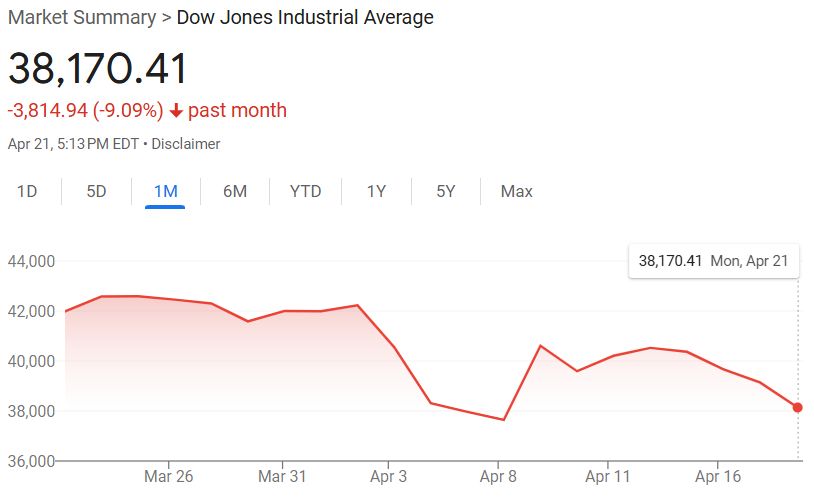
almost ten percent of the equities traded in the markets of the United States
evaporated into thin air over the course of a few short weeks, the danger of
building our foundations on sand becomes all too apparent. We have two choices
in life. We can live for the kingdom of God which shall never be destroyed, or
we can live according to this world's kingdoms worshipping at the shrine of
wealth and power. Even though we see throughout history that no such wealth and
power is immortal as each crumbles into dust in its turn, most give themselves
to the pursuit of that brief ride, like a surfer cresting a wave and reveling
in the experience even though he knows the shore and the end of the ride are
not far off. Each of the great rulers of history could not take their glory
with them into the grave where we all go. Emperor and pauper disappear and have
no joy in the grave where they await the return of Jesus and their ultimate,
eternal fate. There will be no security in wealth or power on that day.
The
Apostle Paul wrote in chapter 15 of his first letter to the Christians in
Corinth that when that day arrives all the dead will be called forth from their
graves at the last trumpet. There is no eternal life until then when the mortal
puts on immortality. Death is the great leveler. The wealthy and the powerful have
no advantage over the meek and lowly. Per the Beatitudes that begin the Sermon
on the Mount found in chapters five through seven in Matthew, the meek shall
inherit what the powerful kept from them in this life. Gold will no longer be a
tool whereby the powerful can oppress and manipulate the lowly. James speaks to
such as these, "You have lived on earth in luxury and self-indulgence. You have
fattened yourselves in the day of slaughter. You have condemned and murdered
the innocent one, who was not opposing you." (James 5:5-6) He also says that
the same gold they trusted in for their security will corrode and become worthless.
Yet, all the world seems to wonder after this golden beast that promises so
much and delivers so little to most. We spend the greater part of our lives in
its pursuit. Today, those who have done so have seen how quickly those dreams
can vanish leaving their dreams of financial independence in ruins around their
feet. No matter how much faith they place in those playing the tune they have
been dancing so fervently to, in the end only those calling the tune are the
ones who are obscenely rich. Told that there is no other tune, the macabre masque
continues until the dancers come to realize too late that it is a masque of death
as they all collapse having never realized the promised dream. Even as they lay
in death, the serpent's whisper is heard, "Some lucky dog has to win, and if you don't
play, you know it won't be you."
The
church throughout history even to the present has endorsed this nightmare. Prosperity
Theology is obvious about it, teaching that wealth is indicative of God's
favor. They claim that favor is to be enjoyed in this life because God desires
our prosperity. (Jeremiah
29:11) Ignoring the martyrdoms of Isaiah, Zechariah, and John the Baptist
as well as all of Christ's disciples save John, they base an entire belief system
on this one text which is nothing more than a facile endorsement of greed. For
if wealth is evidence of God's favor, there are a lot of evil, greedy persons
who have that favor. They even murdered Jesus two thousand years ago just as
they oppress and even murder the innocent today. While prosperity theology is
popular with the wealthy, it is never a foundation for the child of God.
Nonetheless, too many ministries are built upon the principle of creating a man-made
income stream as the reason for their ministry.
Every
denomination has fallen on its knees before this golden idol, even my own, the
Seventh-day Adventist Church. For those who think that their denomination is
any better in this regard, it is not. Institutional churches exist for only one
purpose, to create a revenue stream and use that stream to build an empire in
this world. We tell ourselves the lie that we cannot exist without the church,
meaning the institutional corporations, while not realizing that we are the
church. It is not buildings. It is not a corporate structure. It is not the
billions of dollars that pass through denominational coffers. It is one person,
choosing to live a life walking humbly before God. It is not spending tens of
thousands of dollars to go tell some poor "savage" in a foreign land about
Jesus while never sharing Jesus with the person living right next door. The
arrogance to believe that God would call some person in the US to travel to a
tropical paradise to teach the natives about Jesus is living out a 19th
century paradigm that was not even true then. They are more likely to hear
about Jesus from someone indigenous to their country than our neighbor is to
hear about him from us.
The
gospel in the first and second centuries was spread by self-supporting workers,
fishermen, tent makers, physicians, and others who told those they met, who
told others, until the Roman Empire reverberated with the story. They did this
during a time when killing Christians was a pagan pastime. Even though we do
not have Christians murdered in the streets in the United States, we are far
less likely to share our faith with others than those early saints were. A fire
burned in their hearts and that fire set the world ablaze with the message of
salvation. But today that fire has grown cold because even the powerful institutional
churches do not encourage it because they cannot control it. In the 1980s,
while my denomination was struggling to supply pastors to local churches
throughout the conference, I asked the Ministerial Secretary why they did not
use self-supporting lay pastors to fill the gaps. His reply to me was that they
cannot control lay pastors because they are not paid by the conference. I
imagine that is as frustrating for them as it was for the synagogues that could
not silence Paul or the other followers of Jesus because they were
self-supporting.
In
every denomination there are those on the fringes who share their faith without
denominational support. The pastor often gets the recognition and glory from
baptizing the fruit of the witness of these faithful Christians. They do not receive
institutional ordination or a denominational salary. Their children do not get
subsidized parochial school tuition. The pastor typically does not sit at their
table for potluck, instead opting for the table of the political movers and
shakers in the parish, the ones who contribute to pay his or her salary. If the
humble Christian were no longer attending, it would make little difference to
conference bank balances, but if one of the wealthy should be offended by the
pastor, the conference would call for a meeting immediately to ensure that
tithe and offerings continued to flow.
This
is the sad state of the institutional church today. We use our wealth to steer
the gospel ship according to the whims of a few under the assumption that those
sinners are somehow more holy, more enlightened, more endorsed by God than the
humble saint visiting their neighbor. But they are more like the proverbial Dutch
boy at the dike trying to plug the leak with his thumb. They are so absorbed in
stopping any leaks in the pipeline that brings wealth into the institution that
there is no time to live out the simple one-on-one gospel witness.
In
Isaiah, we find seven women who say they will provide their own food and
clothing if a man will only allow them to take his name. (Isaiah
4:1) These women are the churches and the man is Christ. No church is
exempt from this depiction for the number seven signifies completeness. This
speaks especially poignantly to our time, for seven churches are mentioned in
Revelation. (Revelation
1:4-5) Chapters 2 through 3 name the seven churches and their qualities.
This is not only a series of seven churches that existed in John's day. It is
also a historical record of the progression of the church through history from
beginning to end. Number seven again indicates a complete record. The seventh
church, the church of Laodicea therefore is descriptive of the church in the end
time. That church is wealthy and feels no need of Christ who stands outside
knocking to be let in. (Revelation
3:14-22) We are one of the seven women of Isaiah who want the name of
Christ but prefer to provide for our own needs. We are the church of Laodicea
who are rich and have no need though we are wretched, blind, and poor. The institutional
church is so invested in maintaining its power that it will never willingly
change. Fortunately, God is in the business of saving individuals, not institutions.
Institutions are primarily committed to perpetuating themselves. May God have
mercy on us if we fail to recognize that difference.