
Stephen
Terry, Director


Upon
Whom the Ends Have Come
Commentary
for the June 7, 2025, Sabbath School Lesson
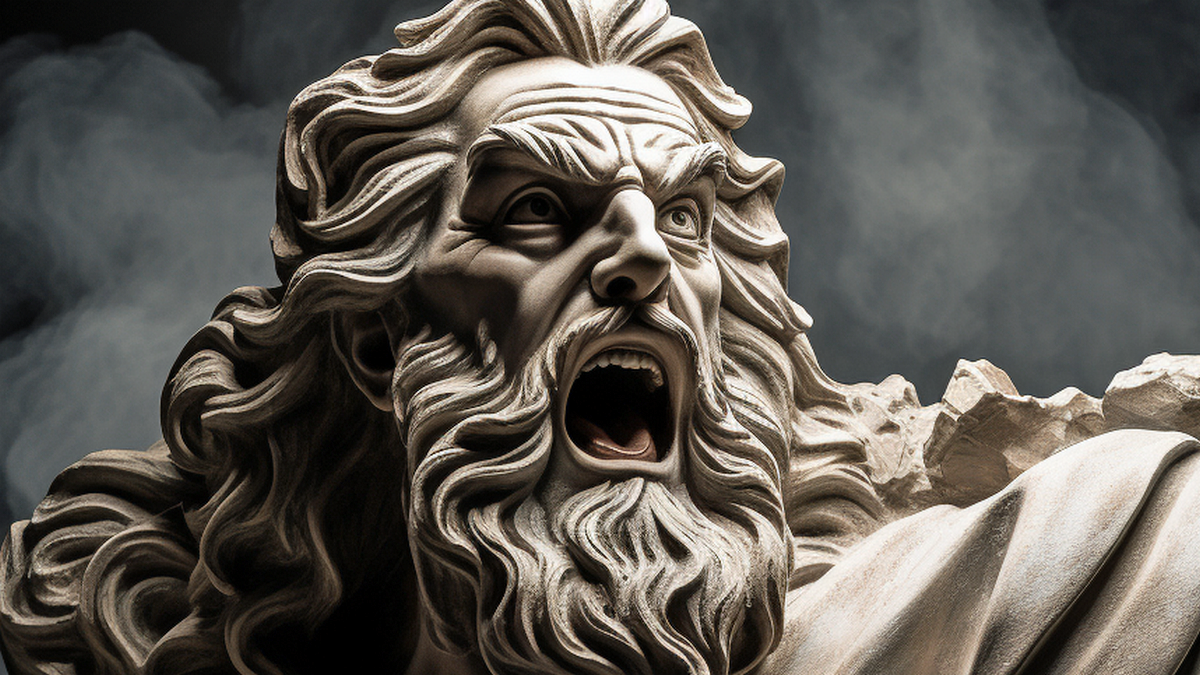 "The Lord said to Moses, 'How long will these
people treat me with contempt? How long will they refuse to believe in me, in
spite of all the signs I have performed among them? I will strike them down
with a plague and destroy them, but I will make you into a nation greater and
stronger than they.'"
"The Lord said to Moses, 'How long will these
people treat me with contempt? How long will they refuse to believe in me, in
spite of all the signs I have performed among them? I will strike them down
with a plague and destroy them, but I will make you into a nation greater and
stronger than they.'"
Numbers 14:11-12, NIV
We
have often heard the story of Chicken Little who went about crying out, "The
sky is falling!" He did this for so long and so often that when disaster
finally came all were caught unaware for they had long
since stopped believing the warnings, and they had just blended into the rest
of the background noise in the barnyard. Then there was the story of the boy
who jokingly continually cried, "Wolf!" He was greatly entertained by his
ability to manipulate others through that simple word when they all came
running to his rescue. However, the longer he continued to do so, the fewer
there were of those who showed up until no one came, thinking he was just
continuing his hijinks. It was then that the wolf came and took him away.
The
moral of these two stories is that if one frequently warns of disaster, people
become calloused to those warnings and will be unprepared should that disaster
one day appear. Christians have been warning of an apocalyptic denouement for
two millennia. At times, this has created a fear-based fervor called an
awakening such as that occurring in the 1840s with the preaching of William
Miller and his associate Millerites. The people are warned to get right with
God to escape his wrath. But like Chicken Little and the boy who cried wolf
discovered, people cannot live in a state of perpetual anxiety. They end up
making a choice between giving in to a permanent manic hysteria or simply
turning off the noise that they might find mentally a place where peace reigns
rather than constant fear. Rather than blaming declining membership on secularism
or humanism, this attempt to find sanity in the face of the judgmental chaos of
modern Christianity could be the reason for a loss of interest in the church's
portrayal of God as an angry being eager to wipe out those who question him or
his rule.
We
become like those we look up to, and if we look up to an angry, judgmental,
vengeful God, we are well on the way to being angry, judgmental, and vengeful
ourselves. We see in the Old Testament how this played out with death and
destruction all around. The reasoning is transparent. If God is looking forward
to wiping out all those who oppose him, then as God's people, we should feel
and act the same. Played out to the extreme it results in sayings like "Daughter
Babylon, doomed to destruction, happy is the one who repays you according to
what you have done to us. Happy is the one who seizes your infants and dashes
them against the rocks." (Psalm 137:8-9) This is what comes from seeing God as
the murderer who kills the entire world, humanity and animals, save eight souls
and a menagerie in an ark tossed about in the Noahic flood. This is the God who
is so angry he wants to destroy Sodom and Gomorrah despite Abraham's pleas for
the sparing of those two cities. This is the vengeful God who wants to destroy
all of Israel and start over again with Moses as in our opening verses from
Numbers 14.
How
do we reconcile this image of God with the character of God seen lighting up
the world through Jesus? If we look at the condition of humanity prior to the
flood, we can parse out an answer. Ancient words tell us, "The Lord saw how
great the wickedness of the human race had become on the earth, and that every
inclination of the thoughts of the human heart was only evil all the time. Now
the earth was corrupt in God's sight and was full of violence. God saw how
corrupt the earth had become, for all the people on earth had corrupted their
ways." (Genesis 6:5,11-12) Anthropomorphism engaged in by such people would
naturally produce a violent and vengeful God who, being all powerful, could not
be gainsaid and therefore had no check on his abuse of his creation. Fallen humanity
itself aspired to that, so why would God not be the ultimate realization of
that purpose? Doubtless to those in charge, things went along pretty well in
that vein until they did not. Those at the top, despite the fear they all lived
under, had life as good as they thought it could be, but for those meeker souls
at the bottom there was only misery and oppression.
But then Jesus. He was the anomaly. The world
expected the vengeful, conquering God to rid them of the Romans back then. They
still preach that kind of God today. Instead, Jesus said that the meek are the
true heirs. (Matthew
5:5) And the merciful, not the vengeful, will find grace with God. (Matthew
5:7) Jesus called to his side James and John, who were so contentious they
were called the "sons of thunder." (Mark
3:17) They were so inclined toward violence that they wanted to call down
fire on whoever slighted Jesus. (Luke
9:51-56) But John was changed by his interaction with the true character of
God. When Jesus said, "I and my Father are one." (John 10:30), the Jews picked
up stones to kill him. Jesus had not only dared to claim equality with God, but
his character was no match for God as the Jews saw him. Unwilling to give up
that vicious image of God, they were blind to the revelation of God's true
character in Jesus. But John came to assert, "Whoever does not love does not
know God, because God is love." (1 John 4:8) This idea is anathema to those who
pray for and look forward to a day when a wrathful God will swoop down and wipe
out all of humanity except for themselves of course. Those who would dance at
the death of the wicked are strangers to the character of God. "For I take no
pleasure in the death of anyone, declares the Sovereign Lord. Repent and live!"
(Ezekiel 18:32)
However, just living is not enough if life is miserable.
He wants to also set us free from the chain that binds us like the chain that
holds a tormented animal prisoner. (John
8:36) The links of that chain are forged from our fears, including our fear
of a wrathful God waiting to catch us out whenever we fall. Such an impersonation
is a characterization of God more favorable to the perpetuation of evil and
darkness than of light. If we remember that even the smallest light cannot be extinguished by even the greatest darkness, then we can
understand how the fear generated by that darkness is driven
back by the light of love and can be cast out of our
hearts and our lives. (1
John 4:18)
Marriage is a metaphor for our relationship with God.
As Jesus pointed out, "Therefore what God has joined together, let no one
separate." (Mark 10:9) It is this connection that we are to seek with God. Not
an abusive, fearful relationship but one founded on and continued in love. The
Apostle Paul in his letter to the church in Rome wrote, "For I am convinced
that neither death nor life, neither angels nor demons, neither the present nor
the future, nor any powers, neither height nor depth, nor anything else in all
creation, will be able to separate us from the love of God that is in Christ
Jesus our Lord." (Romans 8:38-39) God has no desire to enslave us. His thoughts
toward us are thoughts of love. It breaks his heart that humanity chose a path
that brought separation and death. He has done everything possible to the
extent of Jesus demonstrating that love as he bled out up on the cross. What
more could he do? Until we can weep for every lost child who turned and chose
the fleeting joys of this life despite the fear that ensues, we will not understand
the character of God.
We will spend our lives accumulating what we can to
insulate ourselves from those fears, not realizing that it will all be gone at
the end of our short lives. In the game of life, no one beats the house's odds.
We all come up losers in this world's goods. It is better to say, "I have
enough. I do not need more." For all else is vanity. If we recognize the transience
of life, we can find the freedom to love and obtain from life all the joy we were
meant to have. To do otherwise, is to embark on a ship of fools, knowing that
the ship will eventually sink but nonetheless fighting over who gets to be captain
of the doomed vessel and reign over all the other fools on board.
God's love is certainly not the order of this
world. This is why Jesus said his kingdom is not of this world. (John
18:36) If it were, he and his followers would be fighting for fear of being
overcome. But he knew this world had nothing he desired, and fear had no foundation
in his kingdom. We can choose between fear and love. God does not need to be a
wrathful, vengeful being to guarantee the result if we choose fear. Fear brings
about its own sad end and suffers a thousand deaths in the interim. Only love
brings life and light. The love that gave life to a precious child in Bethlehem
two thousand years ago is the same love that breathed life into all of humanity
from the very beginning and speaks to our hearts today.