
Stephen
Terry, Director


Into
Eternity
Commentary
for the June 27, 2026, Sabbath School Lesson
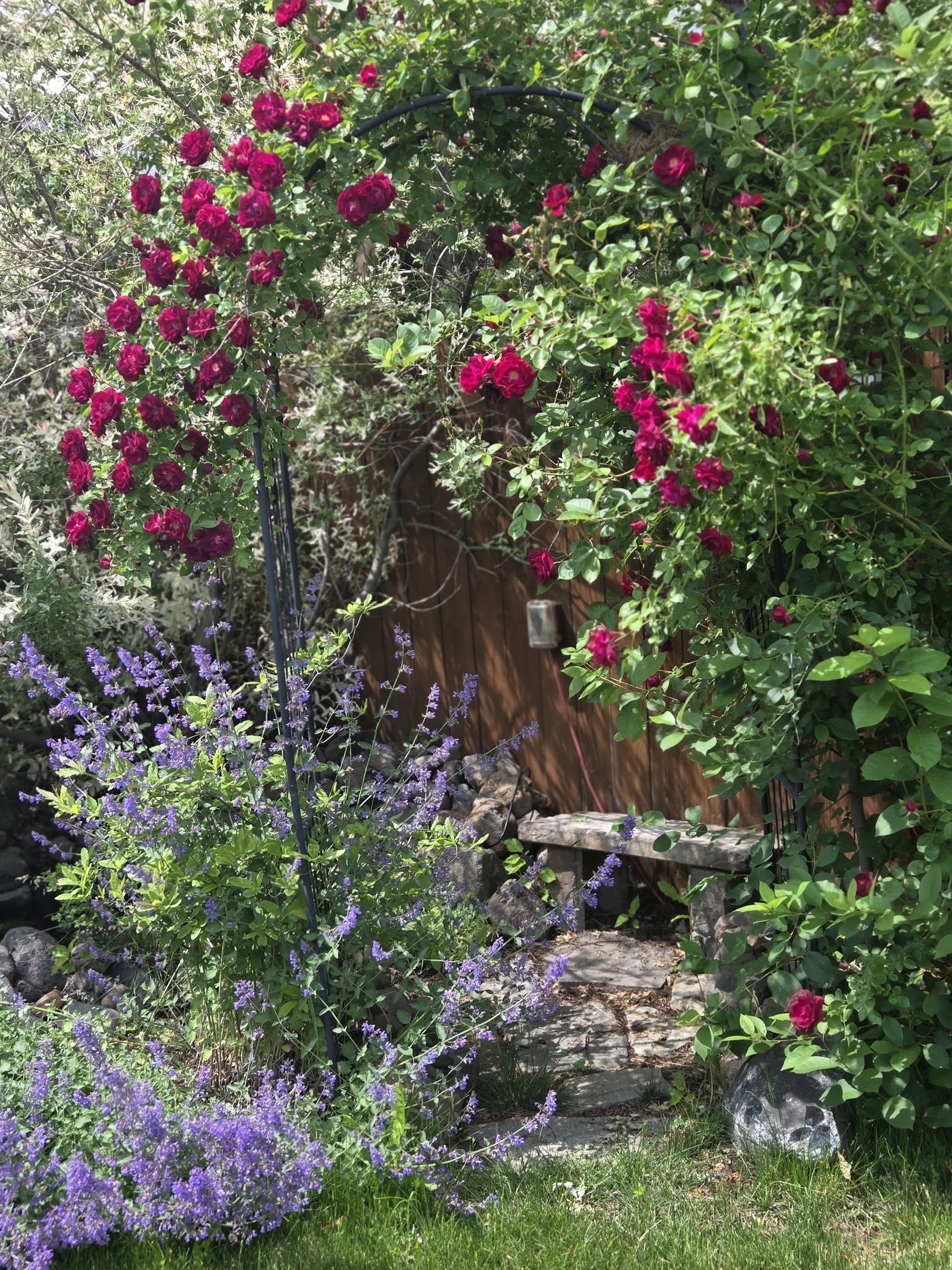 "Now the Lord God had planted a garden in
the east, in Eden; and there he put the man he had formed. The Lord God took the man and put him in
the Garden of Eden to work it and take care of it." Genesis 2:8, 15
"Now the Lord God had planted a garden in
the east, in Eden; and there he put the man he had formed. The Lord God took the man and put him in
the Garden of Eden to work it and take care of it." Genesis 2:8, 15
I have often written and talked
about Creation and the Bible's statement that humanity was begun in God's image.
(Genesis
1:27) According to the Apostle John the defining element of God's character
is love. (1
John 4:8) Thus, those who live loving lives reveal a connection to God and
a desire to live out that creative purpose. While the Bible is largely a metaphorical
history of the conflict between Christ and Satan as depicted in (Revelation
12) and the opposition of two great cities, Jerusalem, a city of peace, and
Babylon, a city of chaos, it is also the story of a garden. Humanity begins in
that garden and will one day return to that garden. It is our natural home, a
home we once willingly walked away from. There we worked in the garden seeing
and learning things that can only be found in a garden. We walked and talked with
the one who planted it and life was good as love flowed between mankind and our
creator.
But we decided it was not enough
and turned our backs on all that love. We hid from our creator. God must have
had tears in his voice as he went through the garden looking for the loving
connection that was suddenly severed. This is where the blame game began. Once
they came out of hiding, Eve blamed the serpent, but Adam went a step beyond
that for he blamed Eve and blamed God for creating her. As God predicted in
response, men have been oppressing women ever since, making their lot much more
difficult. Where we were created to be loving and supportive of one another, we
instead search diligently for personal faults and exploit them to control and
manipulate one another. This was not what God created. It was what we replaced
God's creation with as we stumbled into a chaos of our own making.
This plays out in millions of neighborhoods
across the planet every day. Every time someone plants a tree or a shrub,
plants a vegetable or flower garden, nurtures a grape vine or a berry bush,
they invoke a distant memory of Eden where such activities were not only a
daily part of life, but were also the very definition of life. They still are.
A flourishing garden teams with life. Every creature, whether bird, bug, mammal,
or reptile lives in balance in a natural biome that not only nurtures all those
creatures and us but also provides the necessary balance for lush and verdant plant
life.
I find it pleasant to sit in
such a garden in the evening talking with God as though it were that original garden
of long ago. The setting sun paints the garden with a golden hue before the
birds join me with evensong, and the sphynx moths flit from bloom to bloom beginning
their night shift as the hummingbirds they mimic withdraw. The sun drops below
the western horizon, painting the sky with chartreuse streaks among the clouds
foretelling the next day's weather. Karl Barth once pointed out in his
commentary on Romans, chapter 8, that all of nature exists to glorify God with
mankind the only exception.
Would that that were not true,
but those who still walk away from Eden and God remain a host. They cannot
abide nature seeking its own balance. They see a bug and want to kill it as something
creepy and therefore deserving of death. The same is true if they see a snake,
no matter how harmless the reptile is. A yard that is not a manicured
monoculture of grass is their natural enemy and they will inundate that yard
with thousands of pounds of chemicals over the years,
toxic not only to nature, but to humanity also, to eliminate anything that
would dare compete with the grass, even eliminating such things as clover that
nourish and support the lawn they desire. Billions of dollars are paid to the
lawn care industry to produce something that would never normally occur in
nature.
The same thing occurs with
birds. Because birds, like most animals, defecate, they are destroyed, starved,
and denied water until they no longer come around so the homeowner no longer
needs to get out the hose and wash the mess away. They cannot build their nests
without ready-made food sources and available water. Fruit trees that are a major
food source for some species of birds are not planted because they not only
create the mess from bird droppings, but the trees also drop unharvested, over
ripe fruit. If a homeowner does plant such food sources, they may deny the
birds access which creates a food desert even when there is plenty of fruit. In
the interests of full disclosure, I have done the same in the past, but once,
when a young robin became entangled in the netting I had placed over my strawberries,
I resolved to leave them uncovered lest I be responsible for an unnecessary
bird death, especially a juvenile bird. After all, I can buy berries if I want them.
Only later did I discover that the American Robin is an endangered species
struggling to survive.
I live amid a suburb of mostly
either over-manicured yards or yards that are dead from lack of water. As a
result, I have seen a beneficial garter snake only once in seventeen years.
Even when beneficial, snakes are so hated and feared by many, it is not
surprising they cannot survive navigating the surrounding area to reach our yard.
But they are welcome should they manage it. They would certainly help to keep
the rodent population in balance.
While we may be oblivious to the
needs of nature despite the desire to nurture creation being in our DNA, nature
is aware of our calling and yearns for us to fulfill it. The Apostle Paul wrote
to the Roman church, "For the creation waits in eager expectation for the
children of God to be revealed. For the creation was subjected to frustration,
not by its own choice, but by the will of the one who subjected it, in hope
that the creation itself will be liberated from its bondage to decay and
brought into the freedom and glory of the children of God. We know that the
whole creation has been groaning as in the pains of childbirth right up to the
present time." (Romans 8:19-22)
While the eternal restoration of
Eden is promised for a future time, we can do much to ameliorate the suffering
of creation now if we are willing and have a concern. We can learn what food
sources appeal to the creatures around us and provide them with adequate
sustenance to grow and prosper. We can provide water to sustain them, not only
during heat spells but also for as long as they remain before flying south for the
winter. And we can remember to provide those water sources in shady areas so
the birds, bees, and various insects that rely on them are not forced to rely
on water that becomes too hot for them to use. We can plant blooming plants
that will provide nectar and seeds for the various species that need them. And
unless we really need it to feed our own families, we can share what we grow with
nature. Birds are natural gardeners, sharing their droppings as fertilizer with
the trees as they feed. They also spread the seeds everywhere to provide a more
supportive habitat for their feathered brothers and sisters.
We can also instruct our
children about our interactive dependence on nature so that they grow to be
human beings that are beneficial to society. It is said that those who become
sociopathic often begin by abusing animals. It only follows then that those adults
who are socially mature and caring become so by being taught a caring and
loving attitude toward nature and the creatures who live around and among us. A
child who loves and cares for a pet has already gone a long way on the path to
Eden. Transitioning that care to the rest of nature becomes easier with that
foundation. It also helps us to understand love and the price of that love. Pets
usually have much shorter lives than we do. This means that at some point the
pet will die and we and our children will experience loss. That loss is not
unlike the separation felt by Jesus when Lazarus died. Even though, he knew
that he was going to restore Lazarus to life, Jesus experienced the sorrow of
that separation and wept. (John 11:35) Death is an enemy that will one day be destroyed,
bringing an end to that heartbreak. (1
Corinthians 15:26) When that happens, creation will be restored. The Garden
of Eden will bloom again, and once again God will seek us out among the
blossoms to walk and talk with us as in days past. And hugs will be given all
around as hearts overflow with love. All creation will sing of God's love that
made it possible.