
Stephen
Terry, Director


Repentance
and Forgiveness
Commentary
for the June 6, 2026, Sabbath School Lesson
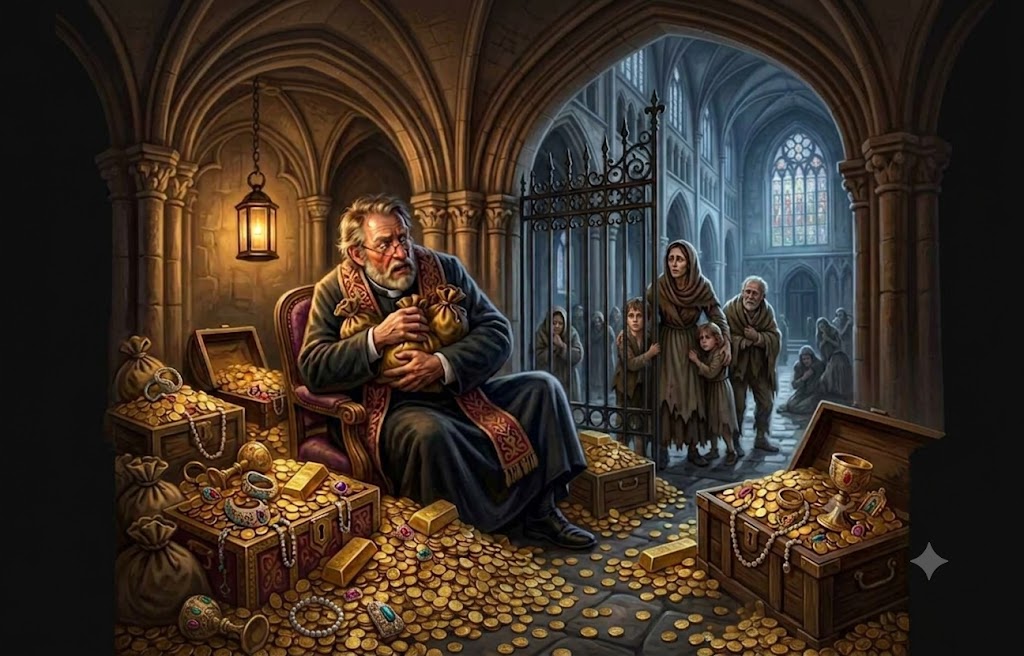 "'Lord,
when did we see you hungry or thirsty or a stranger or needing clothes or sick
or in prison, and did not help you?'
"'Lord,
when did we see you hungry or thirsty or a stranger or needing clothes or sick
or in prison, and did not help you?'
"He will reply, 'Truly I tell you, whatever
you did not do for one of the least of these, you did not do for me.'" Matthew
25:44-45
This week I will do two things.
I will continue with the definition of sin I advanced last week, and I will
turn the tables on the subject presented in the quarterly. While the quarterly
is addressing the need for individual repentance for sin, I will examine the
need for the church to admit the need for corporate repentance and to publicly
demonstrate that repentance as evidenced by refutation of the very actions that
have given the church such power over the individual, power that enables the
church to extort material wealth and personal time as well as exercise political
control over the people through fear of condemnation of them and their families
to eternal damnation if they do not comply.
For centuries the church has
railed against sins like theft, though they have stolen from the poor and further
enriched those already wealthy, sins like murder though the church has willfully
murdered millions in the name of God with little remorse for doing so, sins
like kidnapping though the church has stolen people away into dungeons and
towers to starve, torture, rape, and leave to rot in darkness infested with
vermin, forgotten until someone remembered to sweep the decomposed corpses from
the cell because it was needed for more captives.
Ironically, these things were done
because people through the efforts of several martyrs and saints began to
discover that the very Bible the church held as justification allowing them to
ride with abandon and bloody spurs over the backs of the people condemned those
practices the church so wantonly coveted. Those who would be shepherds instead
of feeding the flock preyed upon it. This has been true for thousands of years
and contributes to why the poor have so little and the wealthy so much. They
would have the poor believe it is because they are such miserable sinners and
are under God's curse that they have so little and the clergy have such means because
they are blessed by God for their faithfulness. Ironically, while some deny prosperity
theology, they live it out in their lives as though it singularly evidenced God s
approval. But the covetousness of the clergy only encourages the same sin among
the flock who look to the church for guidance. However, when people are called
to repent, their sin is not as great as the church's. They have only corrupted
their own walk with God.
But the church corrupts the
entire flock through its example and teaching. Theirs is the greater sin. But
they have silenced the voices of the prophets who once called out their
corruption as Jesus pointed out. He warned, "You snakes! You brood of vipers!
How will you escape being condemned to hell? Therefore I am sending you
prophets and sages and teachers. Some of them you will kill and crucify; others
you will flog in your synagogues and pursue from town to town. And so upon you
will come all the righteous blood that has been shed on earth, from the blood
of righteous Abel to the blood of Zechariah son of Berekiah, whom you murdered
between the temple and the altar." (Matthew 23:33-35) Note that the very condemnation
to hell that they had been using to control the people, Jesus said would be
their lot instead.
For thousands of years, the
church, uniting with the power of the state where it could, continued to do all
it could to silence and oppress those who would speak truth to power. It has
always remained to individuals, through the gift of the Holy Spirit received because
of their own repentance (Acts
2:38), to speak that truth as deacon Stephen did (Acts
6:8-7:60), for the church has never repented from going astray. To do so would
cost them power and influence in the secular world. They have spent generations
sacrificing their own flocks to court that power as they built secular kingdoms
with the trappings of religion as though God either could not see or did not
care what was happening, or even did not exist, revealing the agnosticism and
atheism of those who build non-profit religious corporations today, claiming hypocritically
that the tax-free blessings were the result of God's favor and never a curse.
From Genesis to Revelation, the
Bible is the metaphorical story of two cities: Jerusalem and Babylon. Their etymology
succinctly tells the story that the Bible tells in detail. "Jerusalem" means "Place
of Peace." "Babylon" means "Place of Chaos and Confusion." It is where the
Bible says language became confused. It is why we argue endlessly today whether
"Allah" and "God" are the same word only in different languages. How many
millions have perished over the confusion caused by that one term? And how many
millions in riches have been raised to fund those wars? How many children considered
lucky to have survived have grown up orphaned by such warfare?
It is easy to Google and find
out how many presently are nominally Christian in our world. Churches freely
publish those figures as growth in those numbers is taken as God's endorsement
of the church fulfilling its purpose. According to PEW Research figures from
2025 those who identify as Christians are approximately one third of a global
population of over 8 billion. So where do we find these billions of Christians?
Studies show that Christian growth in some geographical areas is in much greater
numbers than others, but that is not what I am referring to. I am asking where
are they found denominationally? There are so many denominations of the Christian
faith and so many new ones being created continually that it is hard to nail
down exactly. Each denomination believes it is the true church; else why would
they distinguish themselves from other denominations? My own denomination believes
it is the true remnant church of the end times based on Revelation 12:17. "Then
the dragon was enraged at the woman and went off to wage war against the rest
of her offspring--those who keep God's commands and hold fast their testimony
about Jesus."
Those two identifying attributes
have come under question of late. For instance, the interpretation of "keeping
God's commands" is closely identified with perfectionism in observing the
commands handed down at Mt Sinai as essential to salvation, while at the same
time living lives that deny the two greatest commands delineated by Jesus:
"Love the Lord your God with all your heart
and with all your soul and with all your strength." (Deuteronomy 6:5)
"Do not seek revenge or bear a
grudge against anyone among your people but love your neighbor as yourself."
(Leviticus 19:18)
In this they demonstrate it is
possible to observe the Ten Commandments and fail to observe their essence and
thus fail to achieve the perfection claimed to be attainable through our
efforts. The churches of every denomination need to repent of leading their
flocks astray in this. The result has been confusion over God's character and has
led to chaos and conflict among the saints. That chaos has not placed us in
Jerusalem. We are instead in Babylon. It is not just Seventh-day Adventists who
are there. We have lots of company.
How do I know this to be true?
The Bible tells us. First it tells us we have become indifferent about our true
state as Christians. When speaking about the last of the seven churches of
Revelation, Laodicea, which is often identified with the church of the End Times,
we are told that church does not think they have any needs at all, the very
definition of being perfect. They are unable to see the poverty of their
perfectionism. Their refusal to open the door to Jesus can be seen metaphorically
as denying his emphasis on love over perfectionism. Thus, they come into
poverty of the very faith they claim to have. Only Jesus has the cure for their
blindness, but he is left standing at the door. In the end, the very practices believed
to identify them as the End Time remnant led to their rejection of Christ alone
as the one who can save them from their blindness. (Revelation
3:14-18)
Secondly, in Revelation 18, the
call goes forth "'Fallen! Fallen is Babylon the Great!' She has become a
dwelling for demons and a haunt for every impure spirit, a haunt for every
unclean bird, a haunt for every unclean and detestable animal. For all the
nations have drunk the maddening wine of her adulteries. The kings of the earth
committed adultery with her, and the merchants of the earth grew rich from her
excessive luxuries."
Then I heard another voice from
heaven say: "Come out of her, my people, so that you will not share in her
sins, so that you will not receive any of her plagues; for her sins are piled
up to heaven, and God has remembered her crimes." (Revelation 18:2-5)
Note from these verses where God's
people are when Babylon falls. They are in Babylon and God calls them out. If the
Church of Laodicea is the End Time church, then it does not bode well for those
who hear God's call to come out. They will not feel the need. Whatever happens
to Babylon will happen to them as well, but not because God willed it. As Adam
did in the Garden of Eden, they no longer walk with God.They traded for what the world offered
instead, choosing to see it as God's endorsement of their choice. As goes
Babylon, so goes the church, and as the church goes, so goes the flock. The eye
salve Jesus offered was rejected out of hand. Perfectionism did not see the
need.