
Stephen
Terry, Director


The
Role of the Bible
Commentary
for the April 25, 2026, Sabbath School Lesson
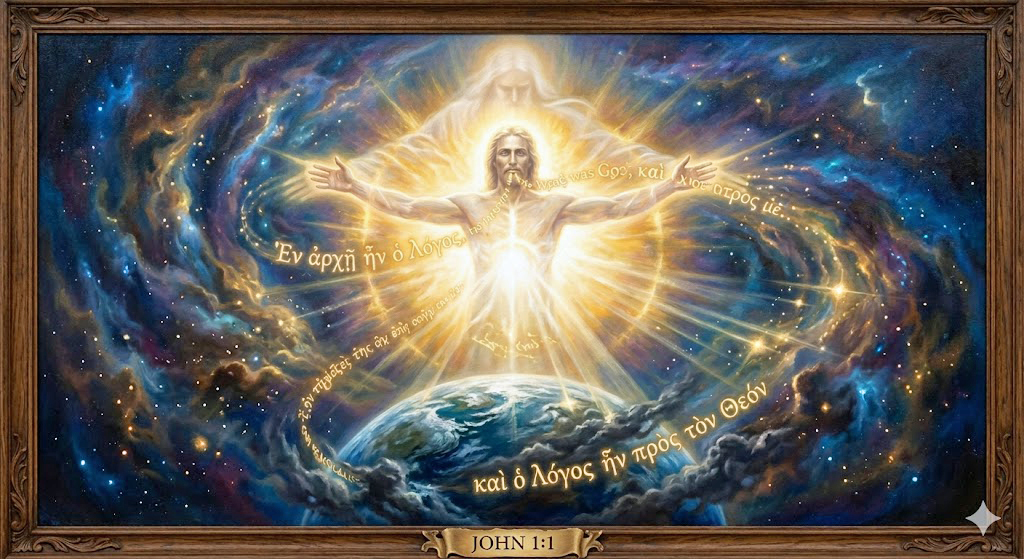 "In the beginning was the Word, and the
Word was with God, and the Word was God. He was with God in the beginning. Through
him all things were made; without him nothing was made that has been made. In
him was life, and that life was the light of all mankind. The light shines in
the darkness, and the darkness has not overcome it." John 1:1-5
"In the beginning was the Word, and the
Word was with God, and the Word was God. He was with God in the beginning. Through
him all things were made; without him nothing was made that has been made. In
him was life, and that life was the light of all mankind. The light shines in
the darkness, and the darkness has not overcome it." John 1:1-5
In this lesson commentary, I
will propose some reinterpretations that may appear radically different from
foundational perspectives on the Bible and its role in our relationship with God.
The Muslims refer to Christians as "People of the Book" because we very nearly
idolize the scripture canon handed down to us by the early church. While there
continue to be alternative canons such as the eighty-eight books of the Ethiopian
Bible, most Protestant denominations limit the canon to sixty-six books that
are more familiar to us. Catholic Bibles will often include several extra books
in a section called the Apocrypha. There along with some other texts we find the
historical books of Maccabees I and II that shed light on events during the
period between the Old and New Testaments.
Strangely, even though some of
these extra books have not been published as approved canon, they are nonetheless
referenced by books within the canon. For instance, Jude,
in verses 1-9 is referring to the "Testament of Moses" and in verse 14 to the "First
Book of Enoch." This illustrates that despite the limitations of later
decisions regarding canon, early Christians felt these other sources were
inspired and therefore useful for instruction. The "Shepherd of Hermes" is
frequently cited in ante-Nicene patristic writings but remains nowhere to be found
in either modern Catholic or Protestant Bibles. In many ways, early Christians
were far more open to varied sources of inspiration and encouragement than we
are today. This may in part be because even the earliest books of the New
Testament that we are familiar with today were not written until several
decades after Christ's death, resurrection, and ascension. Faith initially was a
remarkably simple equation. Accept Jesus as the Messiah and demonstrate that
acceptance by repentance and baptism. (Acts
2:38) As a matter of course, the Holy Spirit will then be given, who will
lead the believer into all truth. (John
16:13)
Faith in the beginning of the
Christian era was more charismatic than a matter of impartation by an institutionalized
magisterium. That magisterium emerged as an outgrowth of the politicization of the
faith through sundry church councils, beginning in the fourth century at
Nicaea. Some may argue that the first church council was in Jerusalem when Paul
visited some of the apostles there. However, that meeting falls short in
several respects from what would later be considered councils. The attendance
was limited. No secular authority attached to any decisions made and while it
addressed the issue of circumcision regarding the Gentile Christians, it did
not deal directly with the issue of circumcision and whether it continued to be
salvific for those who were Jewish, Ebionite Christians.
It is the nature of charismatic
faith to be more open to individualized belief. There was something charismatic
going on in the church in Corinth, and Paul, not wanting to crush that
spirituality, nonetheless wrote of the need to evaluate whether charismatics
edified the church and each of the believers or instead caused division through
unintelligible utterances said to be from the Spirit. Paul was right to raise
that issue because if the Spirit were to lead us into all truth, how can that
transpire in the absence of understanding? Although initially meant to give
free reign to the Holy Spirit, in the end, speaking in tongues and the confusion
that ensued may have been an additional impetus to standardize faith and
worship. To achieve that standardization, an established canon as the source
for derivative dogma was necessary. Everything came together in the fourth century
with an initial official canon (a blow to those who were open to other textual
traditions), the banning of Judaic practices such as Sabbath observance (a blow
to the Ebionites), banning women from church leadership (as Paul's letter to
the Corinthians hints at and still remains to be the case in some congregations
today, women's leadership is seen as a challenge to orthodoxy and an encouragement
to taste the forbidden fruit of charismatic gifts uncontrolled by magisterial
limitations), and the establishment of the first creedal tests of authentic
Christian belief (The first documented official records of these creeds are found
in 4th century extrabiblical accounts). These actions go far to
reveal what the church was conflicted over in those early centuries.
These conflicts also reveal how
the attitude toward the Bible changed over time. These changes created
confusion over the Bible and what it is and what it means to us even to the
present. We often use the phrase "Word of God" to refer to the Bible. But the
opening verses of the Gospel of John bring that into question. There, the Word,
"ο λογος," is used to refer, not to the Bible,
but to Jesus. In almost every instance of that phrase, "Word of God" uses that
Greek noun, an exception is found in Luke 3:2 where the word of God is said to inspire
John the Baptist. The Greek there uses "ρημα." Debates have
raged over centuries regarding the import of the two different words. Most seem
to fall on the side of favoring "ρημα" as speaking
specifically to a singular situation, whereas "ο
λογος" speaks to God's overall communication of his
character. Others see no essential difference between the words. It is
interesting to note that in the New Testament, in almost every instance where
the phrase "Word of God" as "ο λογος" occurs, one
could readily substitute the name "Jesus" for "Word of God" without
significantly altering the meaning or intent of the passage.
This does not work if we consider
the Bible to be the "Word of God." In fact, it makes little sense to do so. How
can we say, "In the beginning was the Bible" when the Bible did not exist as such
in the beginning. As I have already said, it did not reach the form we are
familiar with until several centuries after Christ. Besides, the Bible itself
does not refer to itself as "ο λογος." When Jesus
refers to the sacred text in the gospels, the term used is "αι
γραφαι" meaning "the writings" or "the
scriptures." He indicates that the scriptures refer to him (John
5:39), but he did not say that the scriptures and the Word were one and the
same. This calls into question whether we are elevating the scriptures to an
unintended level when we refer to them as the Word of God. Maybe, like John, we
should reserve that title for Jesus.
The Bible is efficacious for
salvation because it tells us about Jesus, but it cannot save us. Only Jesus
can do that. For example, we can tell all our friends about how eating oranges
will give us lots of Vitamin C, an essential nutrient. But all that knowledge
will not save them if they rely only on knowing but never feel the need to
enjoy that sweet citrus for themselves. We could know every verse in the Bible
by heart, but if we never meet the Word who brought it all into being, the
knowledge is in vain. The Bible can tell us where Jesus was born, how he lived,
and what he taught, but until the warmth of his love irradiates our hearts we
are just expert debaters of scriptural esoterica, no more able to save others
than ourselves.
I have learned many things from
the pets I have owned throughout my life. For instance, I could talk to our cat,
Jasmine, about the nutritional advantages of one cat food brand over another,
but if it is not palatable, she will not touch it no matter how right I might
be. It is the same with Jesus. I can cite text after text to convince others to
believe in God. But if what I share with them is not palatable, they will walk
away just as quickly as our cat. Jesus revealed that there is more in loaves
and fishes in building a relationship with him than in listening to someone
pontificating from a pulpit for an hour each week.
We have seen the passage of two millennia
since Jesus walked the temple court in Jerusalem. In that time, we have nailed
down dogma and refined scripture to the point where there is little room to
breathe spiritually. We deceive ourselves into thinking we have done this out
of love for others, but our faith has become fear based. We are taught to fear
what might happen if we do not do this or if we do that. I remember Sabbaths at
Walla Walla College in Married Students Veteran's Housing where theology majors
sat on their porches waiting for sundown so life could return to normal, and
they did not need to fear the approbation of those who judge them if they happened
to speak an idle word or do something they might find pleasant. "God is love,"
and love casts out that kind of fear. (1
John 4:8,18) Love will set us free from the prison that has held us for two
thousand years, and when it does, we will be free indeed. (John
8:36)