
Stephen
Terry, Director


The
Covenant and the Blueprint
Commentary
for the September 6, 2025, Sabbath School Lesson
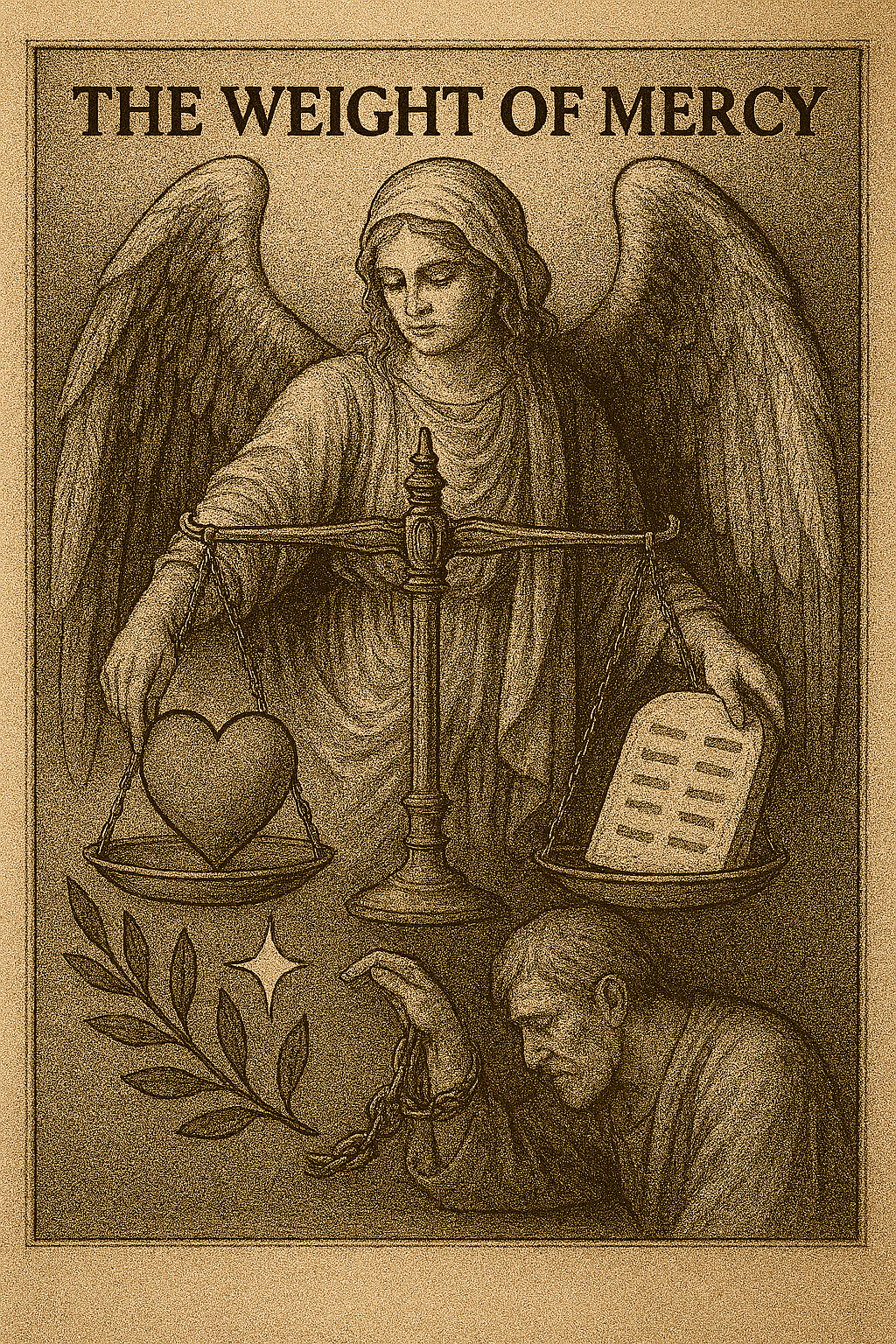 "I will give you a new heart and put a new spirit
in you; I will remove from you your heart of stone and give you a heart of
flesh." Ezekiel 36:26, NIV
"I will give you a new heart and put a new spirit
in you; I will remove from you your heart of stone and give you a heart of
flesh." Ezekiel 36:26, NIV
When
I became a Seventh-day Adventist over half a century ago, it was all about the law
and everything seemed a simple case of black and white to me. In fact, when I
finally attended Walla Walla College, a professor remarked about how I had a
marked inability to see anything as grey spiritually. I was
baptized at the El Paso Central Church while in Basic Training for the army.
The Baptismal Vows were not as extensive as they are today, but they were clear
cut about obedience to the Sabbath, and this immediately brought me into
conflict with the military. They expected me to work on Sabbath. The church
taught me that I should not. I stuck to my guns on the issue, and because it
was war time with the conflict in Vietnam and the army needed an endless supply
of bodies for that meat grinder, they did not push back too hard. Even in
Vietnam, I was able to attend church on Sabbath at our mission compound in Saigon.
I had
enlisted in the army to be trained as a Russian translator, but they rerouted
me to be a combat medic since I was also questioning carrying a weapon. I was
told translators had to carry weapons, but medics did not have to. During the
Vietnam War, my non-combatancy was never an issue. But once the war was over,
and they no longer needed cannon fodder, my beliefs quickly became a problem. I
was punished for Sabbath keeping, and even though I
had been promoted in Vietnam while being a
noncombatant, I was denied further promotion and had
the promotion I had earned stripped from me. There were also planned
attempts to take my life, one of which almost succeeded, and I still have the
scar from that today.
During
all of this, the army contacted the mission president where I was serving and
asked if the Sabbath was as important as I was making it out to be. They told
my battalion commander that it was not, and I was being extreme. This gave them
license to crank up the persecution. Eventually, the Department of the Army at
the Pentagon intervened, and I was honorably discharged.
The miracles I experienced during my last six months in the army and shortly
after discharge confirmed my faith and set me on the path to college and
eventually to pastor a three-church district in the Midwest.
It
turned out the college professor who questioned my willingness to acknowledge
grey areas and the mission president who considered my position on the Sabbath
to be extreme were not exceptions but too often the norm within the
denomination. The rules within Adventism are parsed by a clergy who often never
had to take a meaningful stand for their faith. Raised in Adventist homes,
educated in Adventist parochial schools, and employed by Adventism, Inc., they
were never seriously challenged over their faith. While we used to hear of
missionaries who had to face such challenges in foreign lands, most of those positions
are now filled by indigenous workers, and they are actively creating the same
insular systems to allow their children in those countries to grow up free of
opposition from the non-Adventist world.
We
call people to take a stand for the Sabbath even though it could very well cost
them their employment and send their family into poverty, never having had to
face such challenges ourselves. Conference presidents make considerable effort
to call into ministry those who have never faced such challenges. They want
individuals who will fit into the Adventist culture, not those who will
challenge it by calling out those who place such burdens on others that they
have never had to bear themselves. Compassion and empathy do not grow in safe
retreats where the world cannot intrude. They grow in the crucible of
affliction. The Apostle Paul, writing to his disciple Timothy, said "everyone
who wants to live a godly life in Christ Jesus will be persecuted." (2 Timothy
3:12) This begs the question, if we are living lives protected from the world
by our parochial schools, by our Adventist culture, employed by Adventism,
Inc., are we really living godly lives, living according to God's will?
Just
how bad is this problem? One church I attended, hired a youth pastor who was committed
to outreach to the non-Adventist community surrounding our inner-city church.
He generated significant interest on the part of the young people in the area.
A camping trip for the youth was planned, but not a single Adventist parent
would allow their children to participate in the campout if children from the non-Adventist
community were allowed to come along. Nonetheless, the youth pastor went
forward with the camping trip and remarked later that the non-Adventist
children were so well behaved, he would gladly do it again. However, it was
clear that outreach and culture were in conflict, and as often happens within
Adventism, culture wins out over compassion.
As
Seventh-day Adventists we consider ourselves like the wise man who built his house
upon the rock, and we see that rock as the answer to every trial. But are we
building upon the wrong rock? Are stone tablets from Sinai our rock and not Jesus
Christ? Do we hold everyone up to the Decalogue in judgment? If that is what we
are taught to do with our own lives, how much more then
in our interaction with non-Adventists? The law does not save anyone. It only condemns
us to death. (Galatians
3:11, Romans
3:23, & Romans
6:23) Where then do we find life? Only In Jesus Christ, who said, "I am the
gate; whoever enters through me will be saved. They will come in and go out,
and find pasture. The thief comes only to steal and kill and destroy; I have
come that they may have life, and have it to the full. I am the good shepherd.
The good shepherd lays down his life for the sheep." (John 10:9-11)
The Pharisees
considered themselves far more faithful to the commandments than any modern
Seventh-day Adventist. Yet, they had no problem with murdering Christ. Their
hearts had become stone. They arrogantly assumed an authority never given to
them based on their strict adherence to the law, even creating myriad man-made
rules to help them catch out their own transgressions over even the most trivial
of matters. When we consider the Parable of the Pharisee and the Tax Collector (Luke
18:9-14), we desire to see ourselves as the humble Publican. But we are
more apt to be the Pharisee, seeing ourselves as the righteous person instead
of as the sinner we truly are. Our natural response is to cry out in protest. "I
am not a murderer! I am not a thief, and I believe in God!" But we transgress
in the only way that matters. If we withhold our love from anyone, we are
guilty of all. (James
2:10) I am not talking about the free love of the sexual revolution of the
1960s. I am not talking about the romantic love of the medieval world either. I
am talking about love that manifests itself as kindness and compassion toward
those in need, and empathy for those who suffer. The Pharisee had no empathy or
compassion for the Tax Collector. He was only thankful that he was not an evil
Tax Collector but rather was a righteous Pharisee.
When
we look beyond the walls of our church, are we thankful we are not like those
outside the walls? Do we see others as an opportunity to be kind and compassionate,
or do we see them as a burden better carried by others, not us? This is the
covenant that God calls us to, and the blueprint he consulted as he fashioned
our frame. He looked into a mirror and saw love there. (1
John 4:8) He decided he wanted humanity to look like that and created us to
be loving also. But we decided we did not trust God, and love died. Fear took
its place. With fear came the ocean of tears shed ever since. Even Jesus wept
as a result. (John
11:35-36) It does not have to continue that way. We only need to recognize
what an unloving, fearful people we are and turn to God that he might change us
to be all we were meant to be--loving, kind, and compassionate and creative in
the ways we demonstrate it, just as he was creative when he made us in his
image. (Genesis
1:27)
The
world has only one thing to offer us: fear. We have been afraid for an
extraordinarily long time. It has not served us well. We have not brought an
end to wars. We have not done all we could in tackling disease, poverty, and
homelessness. Crime has not ended. Faith and hope will bring us into the arms
of God, but it is love that will keep us there. (1
Corinthians 13:13)