
Stephen
Terry, Director


The
Plagues
Commentary
for the July 26, 2025, Sabbath School Lesson
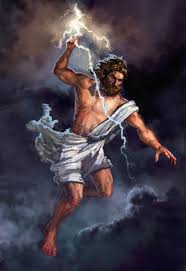 "When Moses
stretched out his staff toward the sky, the Lord sent thunder and hail, and
lightning flashed down to the ground. So, the Lord rained hail on the land of
Egypt; hail fell, and lightning flashed back and forth. It was the worst storm
in all the land of Egypt since it had become a nation." Exodus 9:23-24, NIV
"When Moses
stretched out his staff toward the sky, the Lord sent thunder and hail, and
lightning flashed down to the ground. So, the Lord rained hail on the land of
Egypt; hail fell, and lightning flashed back and forth. It was the worst storm
in all the land of Egypt since it had become a nation." Exodus 9:23-24, NIV
The
account of the plagues is a perplexing dilemma. The story of God destroying
Egypt is not dissimilar from the story of God sweeping the earth of everyone
except Noah, his wife, his three sons, and their wives. In a sense they are
both types pointing to an apocalyptic cataclysm that is yet future, according
to the book of Revelation. The God portrayed thus seems more like the pagan
Zeus of the Greeks who readily hurled lightning bolts at those who displeased
him in any way. This is a common theme in paganism. Rome's Jupiter was the
Latin equivalent of Zeus. One might even see a similarity in the Norse pantheon
between Thor's hammer Mjolnir and Zeus' thunderbolts. Also, as Zeus had an
eagle as a messenger, the Norse Odin had ravens, Huginn and Muninn, who served
in a similar fashion. But if God is just another pagan deity hurling bolts of
lightning, how does that fit with the Apostle John's statement that "God is
love?" (1 John 4:8)
Those
who have chosen to become New Testament Christians will cite this incongruity
in God's character, but that dissonance is present in both Testaments. Moses promotes
this inconsistency. When he asked to see God's glory, "the
Lord said, 'I
will cause all my goodness to pass in front of you, and I will proclaim my
name, the Lord, in your presence. I will have mercy on whom I will have mercy,
and I will have compassion on whom I will have compassion.'" (Exodus 33:19) His
glory was not in destroying the wicked but in forgiving them and showing mercy.
How does one then see the character of mercy and compassion in the God who laid
waste to Egypt?
Even
Paul was challenged by this, seeing us as little more than clay pots God has
created, and he has therefore the right to toss aside those that are flawed. In
dealing with the conundrum of God "hardening" Pharaoh's heart as it says in the
account of the ten plagues, he wrote, "One of you will say to me: 'Then why
does God still blame us? For who is able to resist his will?' But who are you,
a human being, to talk back to God? Shall what is formed say to the one who
formed it, 'Why did you make me like this?' Does not the potter have the right
to make out of the same lump of clay some pottery for special purposes and some
for common use?" (Romans 9:19-21)
However,
this explanation only adds to the problem. If we lay at God's doorstep the
creation of all things for different purposes, special or common, it begs the
question "Did God create evil?" Surely if he is omniscient, he knew humanity
would fall and every imagination of their thoughts would be evil. (Genesis
6:5) He also would have known that there would be rebellion even in heaven
as Satan and his followers rose against God. (Revelation
12:7-10) Why did God allow the evil to rise in the first place, only to
supplant it through a flood or heavenly warfare? Is it to give hope that evil
will one day be overcome? Or is it to show that we have a choice?
Our
Calvinist friends would have us believe that some were purposely created for
salvation and others not, a predestination of the elect. As we might guess,
this is based on the quote from Paul's letter to the Romans I have already
cited. However, it does not explain the wickedness even among the elect. As Paul
also shares in that same epistle, "all have sinned and fall short of the glory
of God." (Romans 3:23) Ever since the Fall of Adam and Eve, sin has brought
only one thing to humanity, death. The older I get and the more disabled I
become through age, the more I feel the breath of that fate on my neck. When we
are young those thoughts are far from us, even though we see it all around us:
the rose petals that fall to the ground to be followed thereafter by the leaves,
the trees each autumn that shed their leaves after a brilliant display of
color, and the pets we love so dearly and leave us so soon with their short
life spans.
When
I was young, I did not give much thought to these things, but now I shed tears,
not only at the loss of a beloved pet, but also the grief of the loss of a
spouse or a close family member. When those things happen, it reminds me of the
death of Lazarus. When Jesus stood outside Lazarus' tomb, knowing he was going
to raise him to life again, he wept. This tells me more about the character of
God than the plagues in Egypt. As a psalmist wrote, "Precious in the sight of
the Lord is the death of his faithful servants." (Psalm 116:15) We might ask, "If
God feels this way, why doesn't he put a stop to all the evil?" He did with the
flood. He did with Sodom and Gomorrah. Neither instance eliminated the problem,
for evil continued to raise its head.
The
Bible reveals the source of that evil is Satan, the one who rose in rebellion
against God. As nature itself tells us, it is futile to pull weeds in the
garden if we do not also pull the roots up as well. We are tempted to pull the weeds
we see all around us to hasten what we feel God is going to do anyway. But
Jesus tells us that is not our work because we tend to pull up the good plants
along with the bad. We draw a large circle around what we feel is bad and an
exceedingly small circle around ourselves and those who agree with us, claiming
to be the remnant elect. A particularly good example of this is when our lesson
cites the passage at the end of Romans, chapter one, excoriating sexual deviancy
but fails to include the first verse in the next chapter. There were no chapter
divisions in the original Greek text. Those were added over a thousand years
later by Stephen Langton to standardize the various texts. The distinction of
where chapter one should end is artificial and is often used just as it is in
our lesson quarterly to express moral superiority over others. If read properly,
it should read:
"Therefore, God gave them over in the sinful desires
of their hearts to sexual impurity for the degrading of their bodies with one
another. They exchanged the truth about God for a lie, and worshiped and served created things rather than the
Creator-who is forever praised. Amen. Because of this,
God gave them over to shameful lusts. Even their women exchanged natural sexual
relations for unnatural ones. In the same way the men also abandoned natural
relations with women and were inflamed with lust for one another. Men committed
shameful acts with other men, and received in themselves the due penalty for
their error. Furthermore, just as they did not think it worthwhile to retain
the knowledge of God, so God gave them over to a depraved mind, so that they do
what ought not to be done. They have become filled with every kind of
wickedness, evil, greed and depravity. They are full of envy, murder, strife,
deceit and malice. They are gossips, slanderers, God-haters, insolent, arrogant
and boastful; they invent ways of doing evil; they disobey their parents; they
have no understanding, no fidelity, no love, no mercy. Although they know God's
righteous decree that those who do such things deserve death, they not only
continue to do these very things but also approve of those who practice them. You,
therefore, have no excuse, you who pass judgment on someone else, for at
whatever point you judge another, you are condemning yourself, because
you who pass judgment do the same things." Romans 1:24-2:1
Too
many see themselves as Phineas running through the camp with a spear, impaling
everyone on behalf of God, a work they were never called to do. They do not
wish to wait until the apocalypse when the angels, who are more in harmony with
God's compassion and mercy, will take on that work. They do not understand why
God does not deal with the sin they see around them now instead of allowing those
spiritual weeds to bloom and sow their seeds. Even in the days of the apostles,
people asked about this, and Peter offered an answer. "The Lord is not slow in
keeping his promise, as some understand slowness. Instead, he is patient with
you, not wanting anyone to perish, but everyone to come to repentance." (2
Peter 3:9)
Although
sin has made death our lot in this life, God's compassion and mercy are
illustrated by the prophet Ezekiel, "No one looked on you with pity or had
compassion enough to do any of these things for you. Rather, you were thrown
out into the open field, for on the day you were born you were despised. Then I
passed by and saw you kicking about in your blood, and as you lay there in your
blood I said to you, 'Live!'" (Ezekiel 16:5-6) This is the God who is love that
the Apostle John saw. He is not willing that anyone should perish and offers
life to all who would have it. He would not have us drive from the fold those
sheep whom he would save and give life to. He only asks that we allow the Holy
Spirit to teach us to model that same love and patience.