
Stephen
Terry, Director


All
to the Glory of God
Commentary
for the August 1, 2026, Sabbath School Lesson
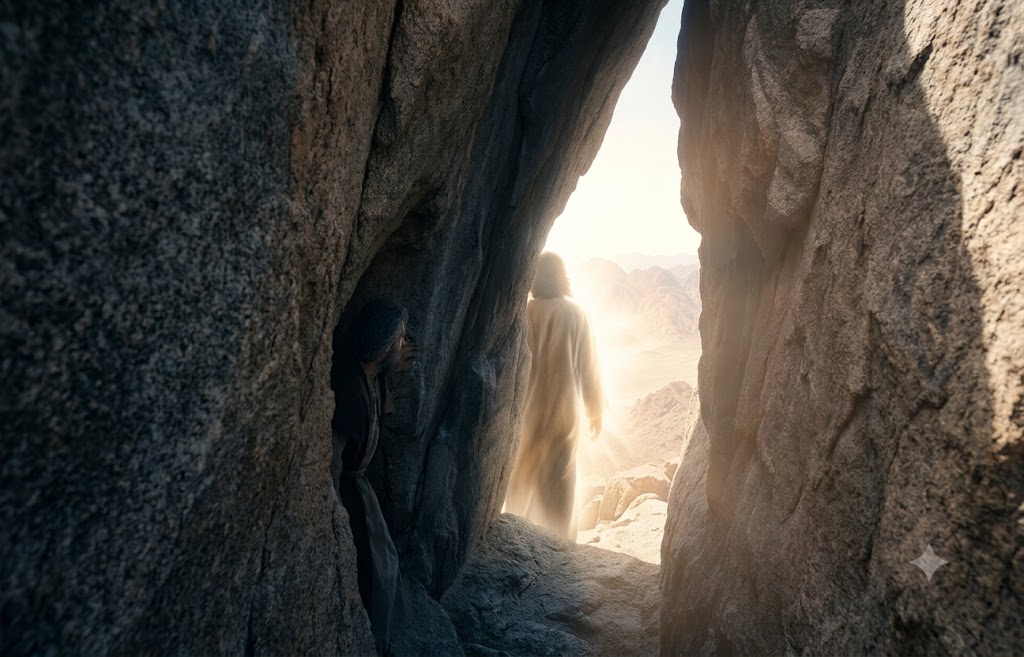 "Then Moses said, 'Now show me your
glory.'
"Then Moses said, 'Now show me your
glory.'
And
the Lord said, 'I will cause all my goodness to pass in front of you, and I
will proclaim my name, the Lord, in your presence. I will have mercy on whom I
will have mercy, and I will have compassion on whom I will have compassion.'"
Exodus 33:18-19
If you were asked to define the
glory of God, what would you say? There are many different accounts about God in
the Bible. Which of those accounts would you refer to as evidence for your
definition of his glory? Would you point to the account of a worldwide flood in
Genesis that wiped out nearly all of humanity and most of the other creatures
populating the earth? Would you use as an example the confusion of the
languages at the Tower of Babel? How about the fiery destruction of Sodom and
Gomorrah where Lot's wife dared to look back with longing at the city she had
just fled with her family only to be instantly turned into a pillar of salt?
What about in the days of Moses?
Was God's glory defined by the ten plagues that destroyed Egypt's economy and
challenged their pantheon of gods? Was his glory defined by all the Egyptians
that drowned in the sea while pursuing the fleeing Israelites? Despite the rejoicing
by the Israelites and the song Miriam sang by the sea, even though Moses knew
of all these events and witnessed personally the deliverance from Egyptian
captivity, he did not see God's glory in any of them for he still petitioned to
be able to see his glory.
God loves humanity, and he loved
Moses. He was one of several individuals that seemed to have special favor from
God. The Bible tells us of faithful Abel, the first born of Adam and Eve.
Murdered by his brother Cain, God's heart surely broke to see Abel's blood
pooled upon the soil, evidence of the horrible act that took his life. We also
read of Enoch who walked so closely to God that one day he simply walked home
with his creator and did not return. Many others who were faithful are noted in
the pages of scripture, but two have a very special place. One of them, Elijah,
who in his zeal had all the pagan prophets of Baal slain at Mount Carmel and
then forgot the power of God he had just demonstrated by calling down fire from
heaven. He fled in fear from Jezebel, a pagan queen who married into the royal
line of Samaria and subverted the worship of God. However, God had not
abandoned Elijah. He spoke to him where he was hiding and trembling in fear, comforting
him, and re-establishing his calling. In the end, despite her threats, it was
not Elijah but Jezebel whose life came to a violent end. Like Enoch, Elijah,
who passed his prophetic calling to Elisha, went alive, ascending in a fiery
chariot to be with God.
Moses did not pass to heaven as
Enoch and Elijah did. Instead, he died. But what does that mean? Many a
preacher has preached the dead directly into heaven at their funerals. Were
that true, doubtless many miscreants would have been surprised at such a
result, expecting if they were going anywhere immediately on death it would have
been something much more scorching. Others have preached that the dead simply
lay in their graves until the last trump sounds and the dead are raised. (1
Corinthians 15:51-55) Regardless of what may be popular with any given
preacher, two have been singled out for special favor. When Christ faithfully
offered himself up on our behalf, it was Moses and Elijah who met with him on
the Mount of Transfiguration and buoyed his spirit for his final days of
ministry before he would die on a rude cross outside Jerusalem, bleeding out
the life that would set us free. While the Bible never explicitly says, Moses
could be seen as a representative of those who die and are resurrected from the
grave to be with God, and Elijah may be seen as representative of those who go
to be with God without tasting death, including those who are alive and remain
at the time of the Parousia.
But even in that illustrious
pair who communed with Jesus on the mount, Moses stood out as unique for he
alone, in his day, asked to see God's glory. God knew it would be too much for
Moses to see him face to face, so he placed him in a cleft of rock and covered the
man until he passed by that cleft so Moses would only see him from behind. What
an awe filled moment that must have been, but as awe inspiring as it was, it
was not the most important part of the experience, for it was what God said in
passing that revealed an eternal truth. It was God himself defining his glory
that was the greatest revelation of that experience. God's glory is not in the destruction
of evil. It is not in the punishment of the wicked. The two words that define
God's glory are mercy and compassion.
It is not unreasonable for us to
expect the church, which has been known to refer to itself as the body of
Christ to reflect that glory in its own image. Sadly, there is often more of Cain
than Abel in the church throughout history and even to the present. The Inquisition
and the Crusades are well known examples of a Christianity that would rather
kill its detractors than love them with a love commanded by Jesus at his Sermon
on the Mount. But another example rarely talked about are those church members
who willingly enlist in the armed forces of their countries to kill the "godless"
enemy. Ironically, it can be others of their own Christian denomination in the
opposing army that are also convinced they are doing God's will by angrily firing
hot, lead bullets into the bodies of their brothers to kill them before they
themselves are shot down.
I served over six years as a
conscientious objector medic during the Vietnam War years. I saw firsthand the
insanity of war and the evil seed it continually sows in the blood-watered
ground of every battlefield. It is like having a tiger by the tail. No one
wants to be the first to let go for fear that tiger of war will eat them alive.
It is that fear that feeds the war machine the gore of millions of bodies that
keep its gears lubricated. But if we, as Christians, think it is glorifying God
to tell others we are killing the enemy, be they communists, socialists,
fascists or whatever ilk they manifest as furthering the kingdom of God, we do
not understand God's glory. We do not know him. (1
John 4:8) Even my own denomination, the Seventh-day Adventist Church, has
lost its way over this failure to understand God's glory. We have gone from a
noncombatant stance as a denomination to having special services to honor those
who have enlisted in their country's military, those who are willing to take
the lives of the enemy, confusing Christianity with patriotic nationalism.
Despite Jesus proclaiming his kingdom
is not of this world, they seek to override that and strive to set up
Nebuchadnezzar's golden image and demand all must bow before it under pain of
death. (Daniel
3) We are all in Babylon on the plain of Dura. The choice has been made
clear, either bow down before that image of nationalistic authority or die. The
choice is that stark. To our eyes, failure to bow down will mean the loss of
everything, our possessions, our families, our lives. It would be so simple to
acquiesce and fall in line with everyone else.
Several times the early church
was forced to face this dilemma, The persecution under the emperor Decius in
the third century being one example. Christians were required to burn incense to
the emperor and declare him to be a god. Then, as now, several felt there was nothing
to the statements and actions, performed them, and went about their business.
But there were others of the ilk of Shadrach, Meshach, and Abednego at Dura.
They alone among the thousands gathered refused to bow down before
Nebuchadnezzar's golden image. They recognized that compromising their faith
when such compromise was demanded would end up with a faith that meant nothing
at all. Like those three earlier souls at Dura, some refused to compromise during
the Decian persecution and were martyred.
According to Daniel, the three
at Dura were saved by God's direct intervention. That did not happen in the
third century under emperor Decius and maybe that is why the church has become
what it is today, in bed with those in political power and uninterested in
extricating itself from the fear-base manipulation that has brought about such
a poisonous compromise by those who claim to be of the heavenly kingdom of God
but are instead heavily invested in building the kingdom of mankind here and
now. But in the process if we forsake mercy and compassion, then we are
Ichabod, for the glory has departed. If we seek God with divided hearts that
still seek to build a kingdom here, he will not be found even though he is very
near. "For I know the plans I have for you," declares the Lord, "plans to
prosper you and not to harm you, plans to give you hope and a future. Then you
will call on me and come and pray to me, and I will listen to you. You will
seek me and find me when you seek me with all your heart." (Jeremiah 29:11-13)
Despite our perfidy, God continues to extend mercy and compassion to us. He is
not willing to give up on anyone. That is love.