
Stephen
Terry, Director


The
Power of Christ's Resurrection
Commentary
for the August 22, 2026, Sabbath School Lesson
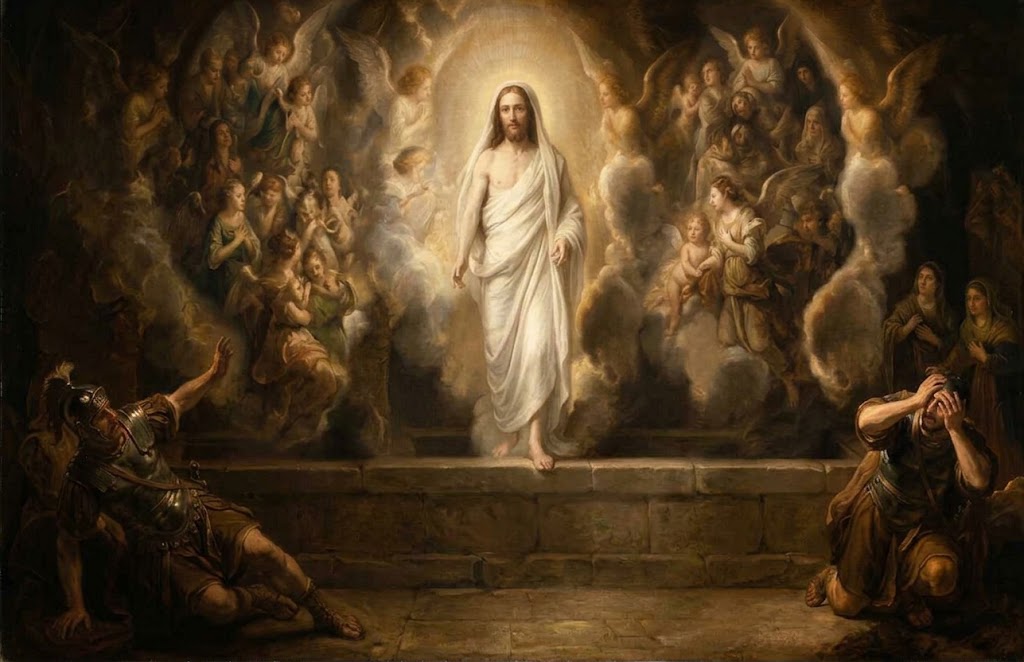 "We are going up to Jerusalem," he said,
"and the Son of Man will be delivered over to the chief priests and the
teachers of the law. They will condemn him to death and will hand him over to
the Gentiles, who will mock him and spit on him, flog him and kill him. Three
days later he will rise." Mark 10:33-34
"We are going up to Jerusalem," he said,
"and the Son of Man will be delivered over to the chief priests and the
teachers of the law. They will condemn him to death and will hand him over to
the Gentiles, who will mock him and spit on him, flog him and kill him. Three
days later he will rise." Mark 10:33-34
The resurrection of the dead is
a recurrent theme in the Bible. There are three instances of literal
resurrection in the Old Testament and one metaphorical one. The first one is
when Elijah resurrected the widow of Zarephath's son. (1
Kings 17:17-22) The second and third examples are from Elisha resurrecting
the Shunammite woman's son (2
Kings 4:18-37) and the unidentified corpse that came to life after being
tossed into Elisha's tomb. (2
Kings 13:20-21) The metaphorical resurrection is presented by the prophet
Ezekiel, who gives assurance of resurrection even if the dryness of the bones
makes it seem impossible. (Ezekiel
37:1-14) However, irrespective of the condition of the body, any sort of resurrection
from death directly challenges all we understand regarding life and death.
It is audacious to claim the power
to resurrect people from death, especially when so many deserving individuals
have died without being granted resurrection. Why were only three resurrections
mentioned in the Old Testament? Maybe this is three witnesses to establish that
the power of God to resurrect the dead is true and he will faithfully do so as
Ezekiel reveals. Interestingly, Jesus also resurrects three individuals,
although his own resurrection would make a fourth. He raised to life Jairus's
daughter (Mark
5:21-43), the son of the widow at Nain (Luke
7:11-17), and his good friend Lazarus (John
11:11-44). Some might wonder why I have said three resurrections in the Old
Testament and three in the New Testament when Moses was clearly on the Mount of
Transfiguration with Jesus along with Elijah, and Jesus was resurrected also.
The difference is that the three I mention from the Old Testament were
resurrected but eventually died again as did the three in the gospels. But
Moses and Jesus were resurrected to eternal life. Elijah of course was never
resurrected because, like Enoch, he did not die. (2
Kings 2:11-12, Cf. Genesis
5:24) The power of Jesus' resurrection also attests to its uniqueness compared
with all others for it even brought to life others who went into Jerusalem and testified
of that power through their example. (Matthew
27:51-53) However, like the other examples cited in the Old and New
Testaments there is no indication this resurrection was to eternal life. This
type of resurrection continued to be a theme among the first generation of
Christians with Peter raising Dorcas back to life (Acts
9:36-42) and Paul reputedly raising Eutychus who fell from a window (Acts
20:7-12). Although it is possible that in the latter case, the young man
was knocked unconscious by the fall, but Paul determined that he was still
breathing and therefore expected him to recover whereas in the case of Dorcas,
like Lazarus, she had been dead for some time, having died while Peter was
still in Lydda.
Resurrection and its various
manifestations is a poorly understood subject in scripture. At funerals and
memorials, I have heard many a pastor of various denominations preach the
deceased straight into heaven at death as though the lid of the coffin was no
more than a turnstile for immediate entry through the pearly gates. This is
probably a well-intentioned dissembling without much thought given to the implications.
It begs the question of how heavenly heaven could be if those who went before
us could look down and see our troubles and afflictions or even our poor life
choices that weigh us down with unnecessary burdens. The prophet Daniel saw
things differently. He wrote, "Multitudes who sleep in the dust of the earth
will awake: some to everlasting life, others to shame and everlasting contempt."
(Daniel 12:2) He apparently saw the same fate at death for both the evil and
the good. No one goes straight to heaven or anywhere else except to sleep in
the grave until judgment day. The idea that they are sleeping implies they are
unaware of what is going on in their absence. Just like when we go to bed at
night, the next thing we know is when we awake and we have no knowledge of
anything that transpired during the night.
Paul enlarged on this theme in 1
Corinthians 15. He maintained that the last trump would awake us from our
sleep as we are called forth to meet Jesus along with those who are still alive
at his return. However, we are not raised with the bodies that we perished in.
We are instantly given an imperishable body that we should live forever. But
that is not the end. This is to enable our service as priests in the order of
Melchizedek, an eternal priesthood without beginning or end (Hebrews
7:1-3) of which Jesus is our high priest. (Hebrews
6:20) Peter calls us to serve as priests, "you are a chosen people, a royal
priesthood, a holy nation, God's special possession, that you may declare the
praises of him who called you out of darkness into his wonderful light." (1
Peter 2:9) But Peter was not talking about Levitical priesthood. That order had
been ended at Jesus death as represented by the rending of the curtain
separating the holy place from the most holy in the temple, tearing it as
though with an unseen hand from top to bottom. (Matthew
27:51)
Despite that demonstration of
God ending the Levitical system of sacrifices and offerings, the early church
was slow to catch on, and even Paul continued to bring offerings to the temple.
(Acts
20:20-24) There were plenty of those who continued to live according to the
laws of sacrifice and found Paul's freedom and preaching against circumcision
objectionable. This may have been an attempt to entrap him, for when he
followed their advice regarding paying for the sacrificial offering of others,
he not only compromised that freedom, by his actions, he nullified the
sacrifice of Christ on the cross, he also ended up arrested and imprisoned with
his life in peril and faced years when he could no longer roam freely to preach
Jesus to others. In the end, it was the destruction of the temple in 70 AD that
finally woke the early church up to the end of the sacrificial system. That and
the Bar Kochba Revolt half a century later put an end to the continuing conflating
of the Levitical order and the sacrificial system and its replacement by the Melchizedekian
priesthood, one that all repentant followers of Jesus are ordained into at
baptism.
So, does this mean that once
ordained into that order there is nothing to do but rest and wait until Jesus
returns? No, it means we allow God to transform what he will of our lives now
that we might be faithful representations of his character. Simply being
ordained is not enough. There are those who are ordained by other human beings
and they tend to manifest the character of those who ordained them. Just as
some serve a god of their own creation based on their fallen temperament, they
pass on that image to those who follow them. The saying goes that no one rises
higher than the one who teaches them. It is our privilege however to go
directly to God that he might instruct us and grow us to be all he intended we
should be. No human teaching can raise us to that level. We do not have the ability
God has to change hearts. Ezekiel tells us that no matter how hardened our hearts
are toward others, God will soften them if we let him. "I will give you a new
heart and put a new spirit in you; I will remove from you your heart of stone
and give you a heart of flesh." (Ezekiel 36:26)
Those who entrapped Paul and
wish to keep us under the Levitical sacrificial system are jealous of our
liberty under Christ. They wish through their strict adherence to the Levitical
system to earn the resurrection Christ freely offered to all and the priestly
ordination in his order proclaiming one loving death and resurrection on behalf
of all. But they seek through their efforts what has already been purchased on
their behalf. It is as though a wealthy benefactor purchased them lifetime
season skybox tickets to all the home games of their favorite sports team and
left them at the ticket booth for them to pick up, but even though they could
never earn enough to pay for the tickets themselves, they insisted on
continuing to work for nosebleed tickets to one or two games per season because
they cannot accept the idea of those season tickets being a free gift. They do
not realize the gift was not free. It still had to be paid for by that benefactor.
And even without the Levitical priesthood and that sacrificial system, the
ordination to the Melchizedekian order, the resurrection to eternal life in
that order are not free either. They were paid for with blood money upon the
cross, and whether we accept that gift or not says whether we would have stood
before that cross in disrespect of the gift or loving the giver.